
7 Solar Panel Installation Design Ideas for 2026 Every Byron Bay Homeowner Should Know
Power bills creeping up, unreliable energy supply during storms, or the rising cost to extend mains connections for rural properties—these are real challenges many Byron Bay, Northern Rivers, and Tamworth homeowners face. Picking the right solar setup isn’t just about slapping panels on your roof. It’s about matching your system size, inverter choice, battery options, and layout to how and when you use energy—while keeping service and warranty support easy under Australian conditions.
By the end of this article, you’ll have a clear set of practical solar panel installation design ideas for 2026 that fit homes and small businesses around Byron Bay, Ballina, the Northern Rivers, and Tamworth areas. Whether you want to reduce bills, handle occasional outages, or power a rural property off-grid, these tips will help you make a confident choice. Typical systems here range from 5 kW to 10 kW, often combined with a 5 kW inverter and battery storage sized to match your night-time use.
Quick overview of solar panel installation design ideas 2026
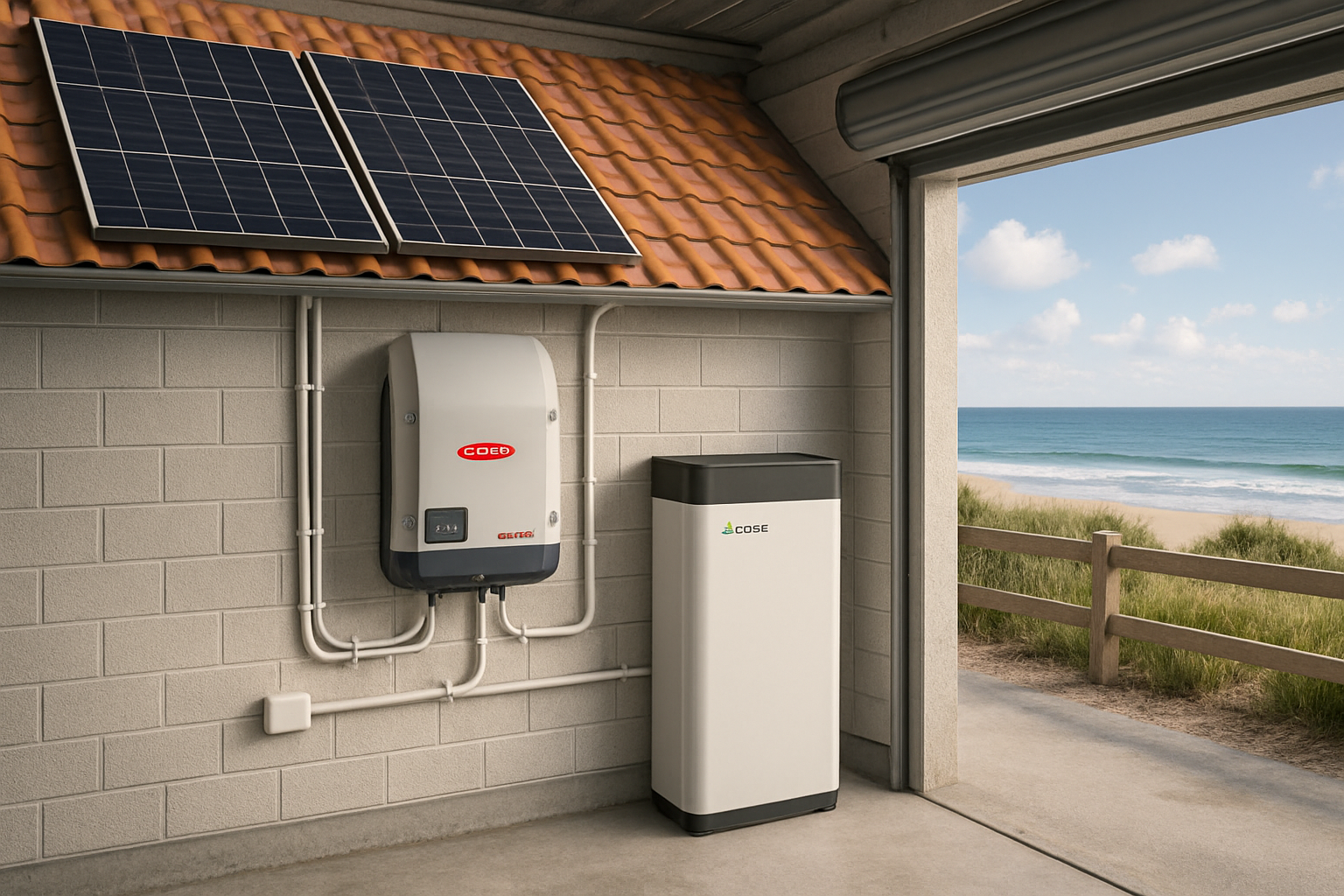
Hybrid solar system featuring battery storage and Fronius inverter
- Best for: Byron Bay and Northern Rivers homes and businesses looking at grid-connected, hybrid, or off-grid solar setups.
- Not ideal for: Properties without clear energy use patterns or those unwilling to invest in quality components and installation.
- Cost range: 5 kW to 10 kW system with inverter and battery storage typically starts around $6,000 and can go over $15,000 depending on battery capacity and complexity.
- What we usually recommend: Hybrid solar with a battery for homes in Byron Bay—perfect for bill control and backup—with CEC-accredited installers on Trina solar panels and trusted inverters like Fronius.
1. How much solar capacity should you install?
Choosing the right system size comes down to your electricity consumption and roof space. Most Byron Bay homes install between 5 kW and 7 kW systems. This size usually balances cost, export potential with feed-in tariffs (FITs), and coverage of daytime power needs.
- If your household uses 15–20 kWh daily, a 6.6 kW system is often suitable.
- For rural properties or businesses in Tamworth using more power or with larger roofs, going up to 10 kW or more can reduce grid reliance.
- Make sure your inverter matches the panel capacity—commonly a 5 kW inverter is paired with a 6.6 kW panel array, which is safe and economical.
A larger system that produces more than you use during the day may increase exported energy, but this depends on your local FIT and export limits. For solar by Byron Bay or Ballina homes with typical tariffs, tailoring system size to self-consumption avoids wasted energy and improves payback.
2. What type of system suits your property: grid-connected, hybrid, or off-grid?
Grid-connected solar
This is the most common setup in Byron Bay and Tamworth. Your system feeds power to your home first, then excess goes to the grid. You get paid a feed-in tariff (FIT) for exports, though current rates vary widely (about 6–14c per kWh, subject to local network policies).
Hybrid solar system
A hybrid solar system combines solar panels with battery storage and remains connected to the grid. It stores excess solar power for use at night and can keep your home running during outages, depending on design.
- Ideal for Byron Bay homes wanting to reduce bills and improve reliability.
- The battery stores energy and reduces peak-rate electricity purchase.
- You can choose battery types like the popular Sonnen solar battery or Sigenergy battery storage for consistent performance in Australian heat and coastal conditions.
Off-grid solar
If your property sits far from the grid or the connection cost is prohibitive (common in rural Tamworth areas), off-grid solar is an option—but requires a robust battery bank and backup power plan.
- Off grid solar tamworth owners typically need larger battery capacity, often over 20 kWh of usable storage.
- Your system design must cover your worst power needs—such as pumps, fridges, and lights—without grid fallback.
- Combining quality panels like Trina solar panels, a rugged inverter system, and an off grid solar battery with suitable surge rating is crucial.
3. Which solar inverter should you choose?
Your inverter handles the vital task of turning DC power from solar panels into usable AC power for your home. Choosing the right solar inverter affects your system’s efficiency, warranty support, and battery compatibility.
- Fronius solar inverters are popular in Byron Bay and Northern Rivers because of their strong warranty support, proven field reliability, and Australian monitoring platforms. Check out the Fronius inverter guide for model comparisons.
- If you plan to add a battery, opt for a Fronius hybrid inverter. It simplifies integration and provides backup power options.
- Look for inverters rated for heat—important in Northern Rivers summer conditions where temperatures can exceed 35°C regularly.
- The “best solar inverter” choice depends on whether you want advanced monitoring, remote firmware updates, or off-grid capability. Cost usually ranges from $1,500 to $3,000 installed for a single-phase 5 kW unit.
4. How should you arrange panels on your roof?
Roof orientation and shading affect system output. Most Byron Bay homes have roofs facing east, north, or west, and partial shading from trees or chimneys is common.
- North-facing is best for Australian solar power production.
- East or west roofs can still work fine, especially with good inverter technology.
- Spreading panels across multiple roof facets or using microinverters can reduce shading losses.
- Consider available space—rural properties usually have less roof constraint but must factor in distance from the switchboard.
- Avoid installing panels under or near tall trees that shade during mornings or afternoons.
Good installers will perform a shading and site assessment and propose the best layout to maximise your solar output across seasons.
5. Do you need a battery to get blackout protection?
A battery is essential for blackout protection if you want your home powered during outages.
- Hybrid systems with a battery like a Sonnen Batterie or a Fronius-compatible solar battery can keep essentials running.
- Battery size depends on your power needs after sunset; typically 8–12 kWh for a family home covering lighting, fridge, and internet.
- Off-grid Tamworth properties will require larger battery banks, tailored to their highest loads.
- Remember, without a battery, your system will shut off in an outage due to safety regulations.
- Batteries improve self-consumption, reducing grid purchases and bill volatility with rising tariffs.
For a good overview of battery options and sizing, see our Offgrid Battery Power Guide (AU) and SonnenBatterie Eco Australia Guide.
6. What maintenance should you plan for after installation?
Maintenance keeps your system running at its best and prolongs component life, especially in coastal Byron Bay or inland Tamworth where dust, salt, and storms can be issues.
- Inspect panels yearly and clean dust, leaves, or bird droppings for optimal output.
- Follow a solar panel maintenance tips and schedule involving visual checks, inverter status monitoring, and electrical safety tests.
- Monitor inverter alerts to catch faults early.
- Maintain battery health by keeping charge cycles within recommended ranges and checking firmware updates.
- Have qualified technicians perform preventive maintenance every 3–5 years.
- Reliable installers will provide support and local servicing for major brands.
7. How can you balance system cost with future energy needs?
Solar in Byron Bay and Northern Rivers homes are often planned with growth in mind: adding batteries later, upgrading inverters, or expanding panels.
- Start with a system sized for your current use but battery-ready if you expect to shift to a hybrid setup.
- Consider warranty length (typically 10 years for panels and inverters, plus battery warranties).
- Look for flexible inverters and compatible batteries that allow straightforward upgrades.
- A good design avoids overspending upfront on unused capacity but leaves room for growth without major rewiring.
- Ask your installer if the proposed equipment has strong Australian warranty support and proven local durability.
FAQs on Solar Panel Installation Design Ideas 2026
What system size suits a 4-bedroom Byron Bay home?
A 6.6 kW to 8 kW system is typical, covering average 20–25 kWh daily use with solar panels by Byron Bay installers. Add a 5 kW inverter and battery for evening loads.
Are Trina solar panels good for coastal conditions?
Yes. Trina solar panels offer decent efficiency, have solid warranties, and are common in northern NSW installations. Local suppliers know how to set up and service them properly.
How important is inverter choice?
Very. The inverter manages energy flow and integration with batteries or the grid. Brands like Fronius have local support and strong monitoring software, ideal for your region.
Can I install solar without a battery and still save money?
Yes. Grid-connected systems without batteries reduce bills and earn feed-in tariffs but won’t provide blackout protection or maximum self-consumption.
How often should I perform solar panel maintenance?
Check visually yearly and clean as needed. Inverters should be monitored continuously, with professional servicing every 3–5 years.
Takeaways for Byron Bay and Northern Rivers homeowners
- If you want the lowest grid bills and decent backup, a hybrid solar system with a battery around 8–12 kWh usually fits most homes.
- For rural or Tamworth properties with unreliable grid links, an off-grid solar system with larger battery banks and backup plans works better.
- Choose a solid inverter—consider Fronius or similar brands—with battery-ready features for future upgrades.
- Plan system size based on actual power use, mains export limits, and roof space, typically 5 kW to 10 kW.
- Regular maintenance protects your investment and keeps output high. Follow a maintenance schedule.
- Work with a CEC-accredited installer familiar with Byron Bay and Northern Rivers conditions.
- For battery choices, learn more about Sonnen Batterie and hybrid options to match your reliability needs.
If you want a clear solar system size estimate and battery options based on your roof and bills, reach out for a free consultation. Send us your latest electricity bill and postcode and we’ll give simple advice tailored to your home’s energy use. Request a quote or talk to a battery specialist to help you make the choice that fits your needs and budget.
This practical advice aligns with real conditions and aims to help Byron Bay, Ballina, Northern Rivers, and Tamworth property owners save on electricity and secure reliable energy supply in 2026.