
Solar for Remote Homes and Farms in NSW: Practical Guide to Off-Grid Solar Power
Living remotely in NSW means you can’t always count on the grid for constant power. Extending or maintaining a grid connection can be costly, especially in places like Northern Rivers or around Tamworth. Solar power offers a practical way to gain energy independence and control ongoing costs.
This guide gives you clear, practical advice on designing a reliable off-grid solar system and how to avoid common mistakes.
What Makes Remote Solar Different?
Remote solar systems must cover your energy needs day and night, often without any or with limited grid connection. They are more complex than typical rooftop solar.
A good system will have:
- Solar panels sized for your daylight needs, considering seasonal changes
- Solar inverters that change DC panel power to usable AC
- Off-grid Batteries to store energy for night or cloudy days
- Backup options like a generator or hybrid inverter if grid power is partly available
These systems must support critical equipment such as water pumps and refrigeration. That means careful sizing based on daily and peak energy use.
Common Mistakes in Remote Solar Systems
Some installers use a generic approach that doesn’t fit your unique property, leading to issues like:
- Batteries too small, causing power loss at night or in bad weather
- Using grid-tied inverters not built for off-grid use
- Overlooking local and seasonal solar variations in NSW
- Not integrating backup generators, which are key in cloudy or stormy periods
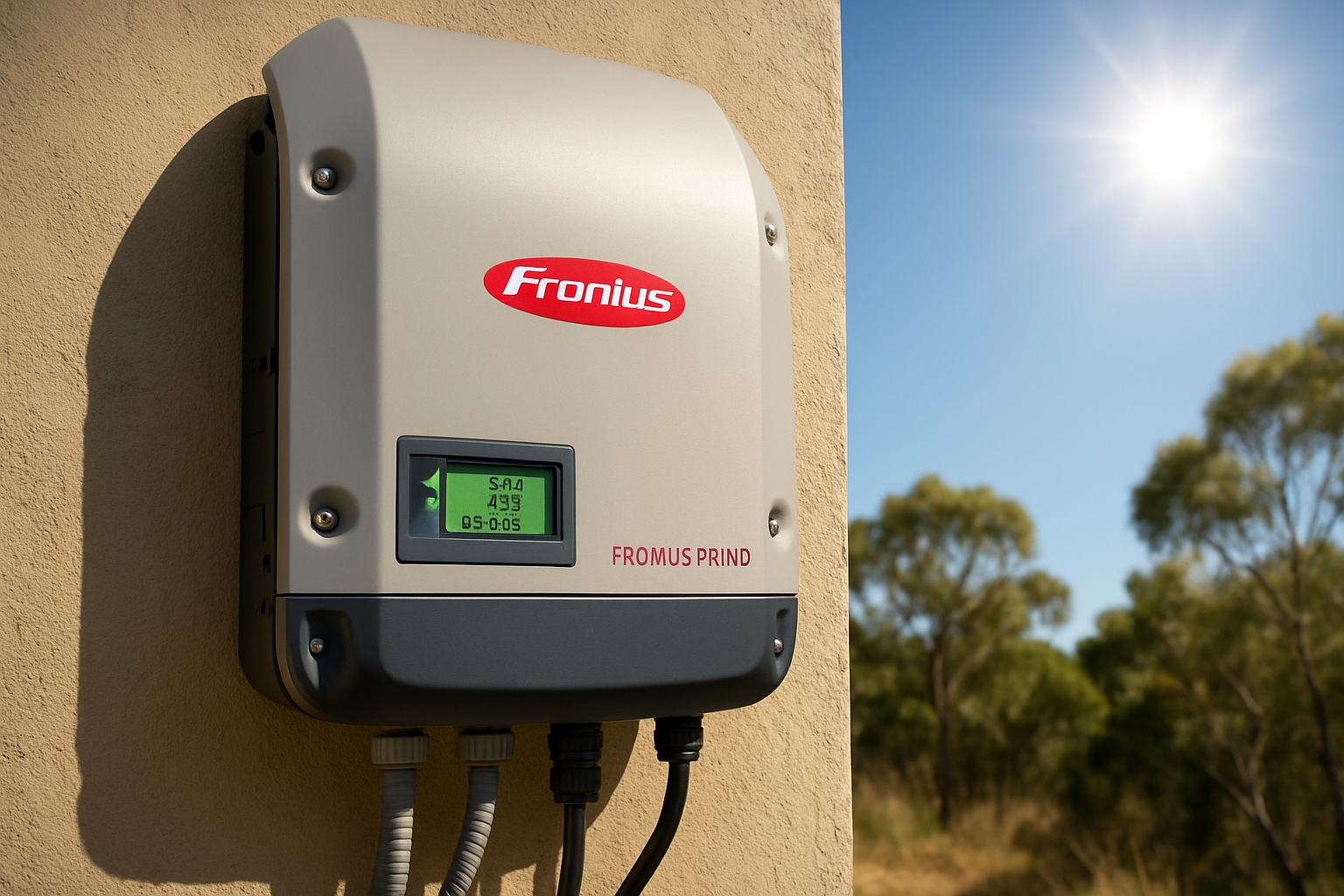
Choosing the right inverter matters. Hybrid inverters (e.g., Fronius) work well where there’s limited grid access. Fully off-grid homes need inverters made to run independently.
How to Choose the Right Solar System for Your NSW Property
Start by asking:
- Are you after bill savings, blackout backup, or both?
- What equipment needs power overnight? This affects Battery size.
- Is your property fully off-grid or partly connected?
For mainly daytime use, smaller batteries suffice. For night-time loads like irrigation or livestock care, larger storage is essential.
Typical sizes:
- Panels: 3 kW for small homes to 15 kW+ for farms
- Batteries: from 5 kWh for small homes to over 20 kWh for farms
For example, a 10 kW solar system with a 15 kWh battery can power a modest off-grid home reliably.
Local Considerations: NSW and Northern Rivers
Each area has its challenges:
- Byron Bay and coastal zones need corrosion-resistant gear due to salt and humidity.
- Inland and hinterland areas face heat, dryness, storms, and bushfire risks.
Make sure your system:
- Uses corrosion-resistant mounts on the coast
- Meets NSW bushfire safety rules with smoke-tolerant equipment
- Is designed for extreme weather which can hinder maintenance
Remote sites often have tricky terrain and limited access. Local expertise like Freedom Energy Solutions helps in smooth planning and installation.
Practical Tips
- Get an on-site assessment from installers familiar with remote NSW conditions.
- Discuss inverter choices—hybrid models suit partly connected sites; dedicated off-grid inverters suit isolated ones.
- Consider a generator backup for critical loads during long cloudy periods.
- Plan for future energy needs—expansion is easier if built into your initial design.
Why Choose Freedom Energy Solutions?
We specialise in solar for remote and regional NSW properties. We understand local climate, rules, and logistical challenges.
We use quality Australian and international components that are durable and compliant with NSW regulations, including bushfire safety.
Our services include:
- Detailed site assessments
- Accurate energy use analysis
- Tailored advice on inverters and batteries
- Transparent quotes with brand and warranty info
- Installation by Clean Energy Council accredited professionals
With us, you get realistic solar power designed for your lifestyle and property.
FAQs
What size solar system do I need for a remote NSW home or farm?
It depends on your energy use and backup needs. Systems often range from 3 kW to 15 kW, paired with batteries sized to cover key overnight loads.
Are hybrid inverters good for remote solar setups?
Yes, if your grid connection is intermittent or limited. Fully off-grid systems need inverters designed to run entirely independent of the grid.
Can I rely only on solar power without a generator?
Often you can, with the right panel and battery size. Still, a generator gives useful backup during long cloudy weather or high demand.
For tailored advice on solar power for remote NSW homes and farms, contact Freedom Energy Solutions. Get a system that’s reliable and suits your property.
Learn more about solar and battery options on our Solar & Battery Advice for Australian Homes page.
Explore Fronius solar inverters and off-grid battery power options to help your decision.
Start your journey to energy independence today.