
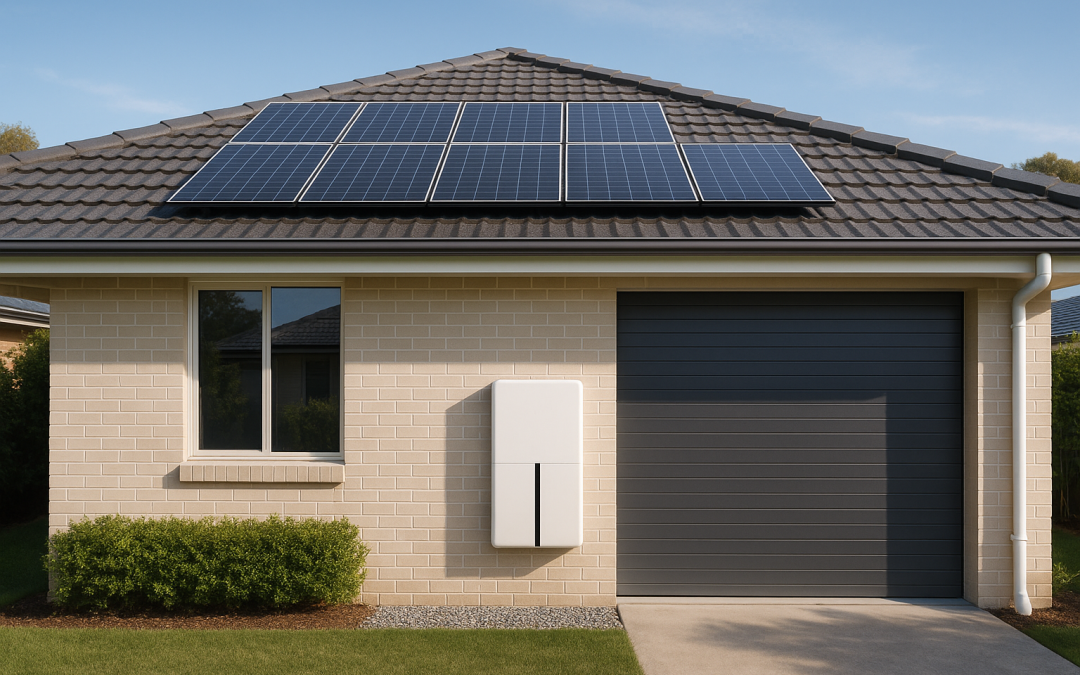
Sigenergy Battery Storage: A Practical Pick for Homes and Businesses
You’re probably here for one reason: you want a Sigenergy battery storage system that actually matches how you use power.
Not a battery that looks good on a spec sheet, then under-delivers because the site wasn’t set up for your loads, your tariff, or your backup needs.
At Freedom Energy Solutions, we design and install solar and batteries across Australia, with plenty of Northern NSW experience. Below is the plain-English guide to deciding if Sigenergy is right for your home or business, and how to set it up properly.
What Sigenergy battery storage is good at (in real homes and real businesses)

A proper battery install starts with switchboard and circuit planning.
A battery has three jobs in Australia. You choose one as the priority, then design around it:
- Bill control (self-consumption): store solar from the middle of the day and use it at night.
- Backup: keep selected circuits running if the grid drops out.
- Off-grid reliability: run the whole property without a grid connection.
Sigenergy systems are commonly considered because they suit modern hybrid setups where battery, inverter, and monitoring work together. That matters for day-to-day performance and also for fault-finding later.
The important bit: the “best” battery is the one that’s sized and configured for your usage.
Residential: how a Sigenergy battery can fit a typical Australian home
Most homes look for two outcomes:
- Use more of your own solar at night
- Keep essentials running during short outages
On-grid solar battery storage (the most common setup)
With on grid solar battery storage, your solar powers the house first. Extra solar can charge the battery. Any leftover export goes back to the grid.
This setup usually suits you if:
- You export a lot of solar during the day
- You use plenty of energy after 4 pm (cooking, heating/cooling, hot water, pool pump)
- Your feed-in tariff (FIT) is low compared to what you pay to import power
FITs and tariffs change by retailer and plan, so we base any payback talk on your actual interval data and current rates.
Backup power: what you can (and can’t) run
Backup is where expectations need to be clear.
A battery doesn’t mean you run the whole house like nothing happened. Most homes back up essential circuits, such as:
- Fridge and kitchen power points
- Lights
- NBN and modem
- Some bedroom power points
- Garage door
Big loads (ducted air con, electric hot water, EV charging) may be limited in backup mode, depending on inverter capacity and how your switchboard is set up.
If backup matters to you, we’ll map your circuits and agree on a backup plan before install.
A quick sizing check (simple, not salesy)
Ask yourself:
- Do you want bill savings, backup, or both?
- What do you actually need to run after sunset?
As a rough guide, battery capacity is measured in kWh (energy). Inverter power is kW (how much it can run at once). Both matter.
If your evening use is modest, you don’t need to oversize the battery. If you have high night usage, a small battery will cycle quickly and still leave you importing from the grid.
Commercial: why Sigenergy can make sense for businesses
Businesses often have different drivers to households.
Instead of “How do I keep the lights on?”, it’s often:
- “How do I cut peak charges and smooth demand?”
- “How do I shift load to cheaper periods?”
- “How do I keep critical gear running through short outages?”
A well-designed commercial battery system can support:
- Peak shaving: reduce short spikes that push you into higher demand charges (where applicable)
- Load shifting: store energy and use it at expensive times
- Operational continuity: keep key circuits alive (IT, point-of-sale, refrigeration, comms)
Three-phase sites need extra care. Battery and inverter selection, phase balancing, and the backup strategy should be planned from the start.
Off-grid solar battery system: where the rules change

Commercial batteries are often about peak control and operational continuity.
If you’re searching off grid solar battery or off grid solar battery system, you’re not alone. Regional properties are increasingly looking to ditch diesel run-time, or avoid high grid connection costs.
Off-grid is a different job to on-grid storage.
You need to design for:
- Winter solar yield (short days, more cloud)
- Surge loads (pumps, compressors)
- Autonomy (how many hours or days you want without sun)
- A realistic generator plan for long wet stretches
A common mistake is choosing an off-grid battery based only on kWh, then finding the inverter can’t handle motor starts, or the solar array is too small to recharge in poor weather.
If you’re building an off-grid battery system, we recommend reading our detailed guide on remote area solar power and sizing, then speaking with us about a site-specific design.
Sigenergy vs other batteries (including sonnen)
A lot of buyers also compare:
- sonnen solar battery and sonnen battery options
- Older “all-in-one” style units (some people search skybox battery)
Brand comparisons can be useful, but the outcome is usually decided by:
- Whether the system matches your usage and tariff
- Warranty terms and support pathways in Australia
- Monitoring and fault support (who you call, and what happens next)
- Backup design (what’s backed up, and how cleanly it switches)
- Expandability (if you plan to add EV charging or more load later)
If you’re already leaning toward sonnen, our guide is a good side-by-side reference: it explains what to look for so you’re comparing the right details.
Location notes: Byron Bay, Liverpool, Tallawong, Adelaide and beyond

Off-grid designs need the whole system sized, not just the battery.
People often find us through searches like solar battery byron. Others search solar battery solutions Liverpool or solar battery solutions Tallawong, and plenty compare options interstate such as sonnen battery Adelaide.
Here’s the honest take: good battery outcomes are less about postcode and more about:
- Your network rules (export limits can vary)
- Your roof space and shading
- Your tariff and metering
- The quality of the install and commissioning
We can talk you through what applies to your property and what doesn’t, based on your bills and a site check.
What to check before you buy Sigenergy battery storage
Bring these questions to any quote call. They save you money and stress later.
1) What’s the battery for: savings, backup, or off-grid?
If the goal isn’t clear, the design won’t be either.
2) What loads will be backed up?
Ask for a written list of backed-up circuits. “Whole home backup” is rarely the right default.
3) Is your site single-phase or three-phase?
This affects inverter selection, battery behaviour, and what “backup” really means.
4) Do you have export limits?
Some homes can’t export much to the grid. That can make self-consumption (battery + smart load control) more valuable.
5) Who handles warranty support?
You want a clear local process. If a system fault occurs, you should know who you call and how it gets resolved.
A practical example: choosing a battery setup that matches your day
Here’s a common scenario we see.
- Daytime: solar exports a lot because nobody’s home
- Evening: cooking, heating/cooling, and hot water drive imports
In that case, a battery can shift a chunk of midday solar into the evening. If you also want backup, we design an essential-circuits board so the battery supports the right loads during an outage.
For a business, the pattern is often the reverse. They may use most power during trading hours, so the battery case depends more on demand spikes, tariff structure, and whether there’s a reason to store energy for later.
Ready for a Sigenergy battery quote that’s based on your actual usage?
If you’re looking for a Sigenergy battery solution for your home or business, we’ll keep it practical:
- Review your bills or interval data
- Confirm your phase supply and switchboard condition
- Talk through backup loads (if needed)
- Recommend battery and inverter sizing based on your goals
Contact Freedom Energy Solutions for a Sigenergy battery storage assessment and a clear, itemised quote. If you’re in Northern NSW, we can also factor in local network rules and coastal conditions during system selection.

Monitoring helps you see what the battery is doing day to day.
FAQ: Sigenergy battery storage
Is Sigenergy battery storage good for blackout backup?
Yes, if it’s set up for backup and your switchboard is configured for essential circuits. Backup performance depends on inverter power (kW) and what loads you choose to support.
Can Sigenergy work with my existing solar?
Sometimes, yes. It depends on your current inverter, system age, monitoring, and compliance requirements. In some cases, an inverter upgrade is the cleanest path.
What’s better: Sigenergy or sonnen battery?
Both can be good choices. The better pick is the one that fits your usage, backup needs, and support expectations in Australia. A like-for-like comparison should include usable capacity, warranty terms, and the backup design.
Do I need an off-grid battery if I live semi-rural?
Not always. Many semi-rural properties are best served by a hybrid system with backup. Full off-grid is usually only worth it where grid reliability is poor, connection costs are high, or you want full independence.
How long will a battery run my house?
It depends on what you’re powering. A battery will last longer if you back up essentials only and avoid heavy loads during an outage. We can estimate runtime once we know your intended backup circuits and typical usage.
Recent Comments