
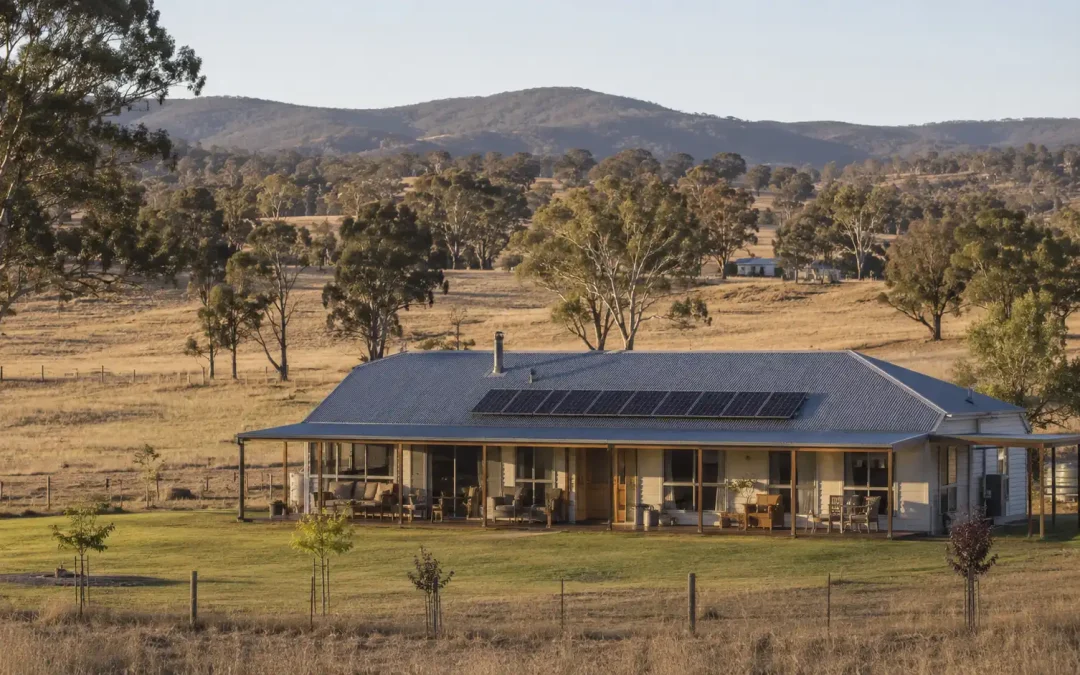
If your property runs on unreliable grid or no grid at all, a well-designed remote solar system is what keeps daily life normal. It runs quietly in the background and costs less to live with than a generator on standby, especially with Australian fuel prices sitting at elevated levels and continuing to move week to week through 2026. A poorly designed one leaves you watching battery levels at 9pm and reaching for the gen-set keys.
Most regional NSW property owners getting quoted for remote solar are working off assumptions that don’t match how the system will actually run. The questions below separate a real design from a guess.
TLDR
Remote area solar power has become the practical choice for regional NSW properties on unreliable grid or no grid at all. A working system needs four components designed together: a solar array sized for winter generation, a battery bank with two to three days of autonomy, a hybrid or off-grid inverter, and in most cases a backup generator for extended cloud cover.
The expensive mistakes are designing for summer conditions, undersizing the battery, misunderstanding the generator’s role, and skipping monitoring.
Before signing a quote, get the installer to show their assumed daily kWh, peak load calculations, and what happens after three to five cloudy days.
What Counts As Remote Area Solar Power

Remote area solar power covers a few common situations across regional NSW.
The first is properties with no grid connection at all, where the system is fully responsible for keeping the lights on. This is the classic off-grid solar setup.
The second is properties with a grid connection that isn’t reliable. Long outages and voltage problems on end-of-line SWER lines push owners toward backup-capable systems, where a hybrid solar setup usually makes more sense than full disconnection.
The third is properties where grid extension is possible but the quote runs into five or six figures for new poles and line works. At that price point, going off-grid usually wins on payback. Our guide on off-grid versus hybrid solar walks through how to decide.
The fourth covers outbuildings the grid doesn’t reach, like sheds, pumps, workshops, and granny flats. These follow the same design principles at smaller capacity, and rural properties tend to suit solar well because of available roof space.
Whichever situation applies, the system has to handle three things: daily energy use, peak loads, and low-sun periods. Daily use is your normal 24-hour consumption. Peak loads are the moments when high-demand items run at once. Low-sun periods are the cloudy stretches when generation drops well below demand. Weakness in any of these is usually where battery sizing makes or breaks the system.
Across the remote installs we’ve completed in the Northern Rivers and New England regions, the systems that perform best are the ones designed around all three from day one, not retrofitted later when the original sizing falls short.
The Building Blocks of a Remote Power System

A standalone power system has four components: solar array, battery bank, inverter, and usually a backup generator. Weakness in any one creates problems the others can’t fix.
The solar array sizes more generously than a grid-tied system, usually for winter generation rather than peak summer output. The battery bank carries the property overnight and through cloudy stretches, typically two to three days of autonomy for regional NSW. The hybrid or off-grid inverter converts battery DC into usable AC and manages the relationship between solar, battery, and generator. Choosing the right battery setup is where most remote systems get sorted.
Most remote installations include a backup generator as part of the design from day one.
A well-integrated generator runs only when the system genuinely needs it, usually during long cloudy stretches or heavy load events, and helps keep battery cycling in healthy ranges. Pairing it with a properly sized battery cuts runtime significantly.
On most of our remote installs, the generator runs only a handful of hours per month once the system is sized correctly.
Standalone systems in Australia are designed under AS/NZS 4509. Any quote you receive should reference compliance with this standard and use components from the Clean Energy Council’s approved product list.
Every remote system Freedom Energy Solutions installs is designed and commissioned to this standard, with components selected from the current CEC approved product list.
Off-Grid vs Hybrid for Remote Properties

The two terms get used interchangeably even though the systems behave differently in practice.
Off-grid systems run with no grid connection. Solar and battery handle everything, with a backup generator for extended cloud. These suit properties with no grid access at all, or where the connection quote is too steep to justify. The trade-off is bigger battery capacity and stricter design discipline, since the system has to handle worst-case weather on its own.
Hybrid systems keep the grid connection but use it as backup rather than the main power source. Solar and battery cover most daily use, the grid fills the gaps, and the system can be set up to manage a generator automatically where needed. These suit properties with a working but unreliable grid, where outages happen often enough to need backup but the connection still has value.
For a deeper look at how hybrid systems work day-to-day, see our guide to hybrid solar setups.
How to Estimate Your Power Needs

Sizing a remote system starts with two numbers: how many kilowatt-hours you use each day, and your peak demand in kilowatts.
Daily kWh is your total energy use over 24 hours. If you’ve got recent bills with daily averages, that’s the cleanest data. If you haven’t, work through your main appliances and how long each one runs. Fridges, hot water, pumps, lighting, and any seasonal loads like air conditioning or heating need to be in the calculation.
Peak demand is what causes inverter overloads. It’s the moment when several high-draw items run together, like a bore pump starting up while the oven is on and the air conditioner kicks in. Workshop tools, welders, and large pumps all push peak loads higher than people expect.
Remote systems most often fail because the design covered daily kWh but missed peak loads. A system sized correctly for daily consumption can still trip out under a heavy load spike if the inverter wasn’t matched to it.
Common Mistakes in Remote Solar Design

Designing for summer and forgetting winter
Winter sun hours and extended cloudy runs are where remote systems get tested. A design that performs well in January but undersized for July will run the generator far more than the owner expected, with the fuel bills to match.
In our experience designing for regional NSW, winter sizing is what separates a system that runs comfortably year-round from one that runs the generator hard for three months of the year.
Under sizing the battery bank
In standalone systems, the battery is the difference between solar power being usable and being theoretical. Daylight generation only matters if you can store enough of it to cover the hours when the sun isn’t producing. Battery sizing for off-grid homes is where most expensive lessons get learned.
Treating the generator as failure
A backup generator earns its place in a remote system by handling the situations solar and battery can’t cover on their own. The design goal is to keep generator runtime low through proper array and battery sizing, while accepting that occasional use is normal and expected.
Skipping monitoring
Remote systems benefit from monitoring because problems develop quietly. Unusual battery cycling, lower than expected solar harvest, and unexplained load spikes all show up in monitoring data weeks before they cause an outage. Without it, the first sign of trouble is usually a flat battery at the wrong moment.
Common Remote System Setups
Most practical remote installations across regional NSW fall into one of three setups.
Solar with battery and generator
This is the standard remote setup. Solar handles daytime loads and battery charging, the battery carries the property through evenings and overnight, and the generator runs occasionally for extended cloud cover or heavy load events. Most regional NSW remote builds use this approach because it balances upfront cost against ongoing fuel use.
Larger solar with larger battery
This setup reduces generator reliance by oversizing both the array and the battery bank. The upfront cost is higher, but fuel use drops significantly and the system runs more independently through poor weather. It suits owners who want minimal generator runtime and have the budget to design for it.
Hybrid backup for unreliable grid
Where the grid is connected but drops out regularly, a hybrid system keeps essential loads running through outages and reduces day-to-day reliance on the grid. The grid still earns its place by handling unusual demand or extended low-sun periods, while solar and battery cover normal use
Questions to Ask Before Signing a Quote

A remote system quote should hold up to a few direct questions. If the installer can’t answer these clearly, the design is built on assumption rather than analysis.
What daily kWh and peak demand figures were used to size the system?
How does the system perform after three to five consecutive cloudy days?
How is the generator integrated, and how often is it expected to run?
What monitoring is included, and what data does it give you?
Which loads are protected as essential, and which get shed when the battery is low?
If the installer can’t walk you through these answers, the system hasn’t been properly designed yet.
Planning a Remote Solar Setup in Regional NSW
Remote solar works best when the system is designed around how the property actually runs. Daily loads, site conditions, weather patterns, and how much generator runtime you’re willing to accept all shape the final design.
Freedom Energy Solutions has been installing remote and off-grid systems across the Northern Rivers and regional NSW for over a decade, from properties west of Armidale and Tamworth to rural blocks in the Byron hinterland.
If you’re planning a new remote build or replacing an ageing off-grid setup, book a site assessment with Freedom Energy Solutions to get a design based on your usage and conditions.
Frequently Asked Questions
Is remote area solar power worth it compared to running a generator?
For most regional NSW properties, a properly sized solar and battery setup costs less to run than a generator over the long term. The upfront cost is higher, but the running costs are lower because solar fuel is free and battery cycling replaces most generator hours. A generator on its own burns through diesel or petrol, runs noisily, and needs regular servicing. A remote solar setup with a generator used only for backup gets the reliability without the daily fuel bill.
Do I always need a generator with an off-grid system?
Most remote installations in regional NSW include a generator as part of the standard design. It gives the system a safety net during extended cloud cover, unexpected high loads, and periods where battery state of charge drops below safe operating levels. Systems designed without any generator backup usually carry an oversized and expensive battery bank that still struggles during difficult winters.
What matters more for remote solar, more panels or a bigger battery?
Both matter, and the right balance depends on how the property uses power. Daily kWh consumption sets the floor for panel sizing. Days of autonomy and peak load requirements set the floor for battery sizing. A bigger battery without enough panels means the battery never fully recharges. More panels without enough battery means generation gets wasted during peak sun and the system still runs short overnight.
What’s the difference between off-grid and standalone power?
The terms are used interchangeably in most Australian contexts. Standalone Power System (SPS) is the technical term used in the AS/NZS 4509 standard, while off-grid is the common name. Both refer to a system that operates without a grid connection.
How long does a remote solar installation take?
Most regional NSW remote installations take two to four days on site once components arrive, depending on system size and site access. The full timeline from quote to commissioning usually runs four to eight weeks, factoring in design, equipment ordering, and any council or electrical compliance work.
Recent Comments