
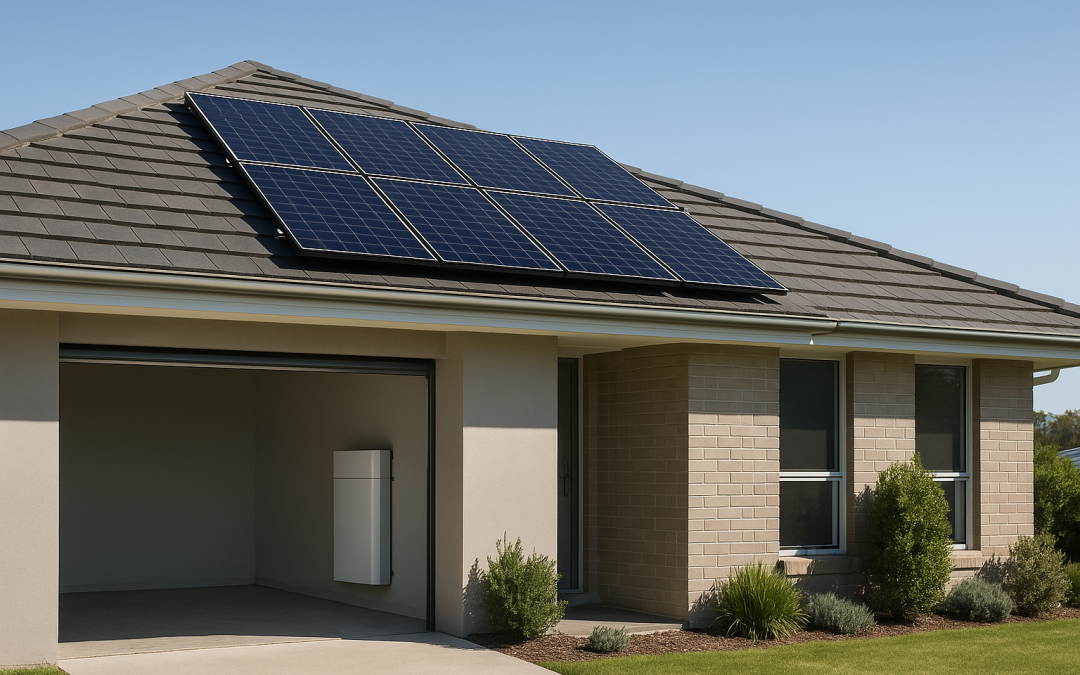
Hybrid Solar explained: practical backup power and better bill control
If your power bill keeps creeping up, you’re not alone. Many Australian homes are paying the most for electricity after the sun goes down.
Hybrid solar is a practical way to use more of your own daytime solar at night. It can also give you backup power for essentials, as long as the system is designed for backup from the start.
This guide explains what hybrid solar is, how it works, what you get in an outage, and how to choose the right mix of solar panels and batteries.
If you want the deeper technical explanation, see: Hybrid Solar Systems Explained (How They Keep You Powered 24/7).
What is hybrid solar?
Hybrid solar is a grid-connected solar system that includes a battery.
A typical hybrid setup includes:
- Solar panels to generate electricity during daylight
- A hybrid inverter to run the solar system and manage the battery
- A battery to store energy for night use
- A grid connection to import power when needed and export excess solar (subject to network rules)
Put simply: it’s solar plus a battery, still connected to the grid, with the right control gear in the middle.
How a hybrid solar system works (plain English)

A hybrid inverter manages solar and battery charging in one system.
A good way to understand hybrid solar is to ask: where is your home getting power right now? The system makes that call automatically.
In the day
Most homes work like this:
- Solar powers your home first
- Extra solar charges the battery
- Anything left exports to the grid (if allowed)
At night
When solar production drops:
- The battery runs your home (up to its power limit)
- The grid tops up the rest once the battery hits its set reserve
During a blackout
This is the part people often miss.
- Standard grid-tied solar switches off during an outage for safety.
- A hybrid inverter and battery can keep your home running only if you have backup wiring and settings in place.
In other words: two “hybrid” quotes can look similar, but deliver very different backup results.
Grid-tied hybrid vs off-grid: which one do you actually need?
Many people start by comparing hybrid solar with an off grid solar battery system.
Grid-tied hybrid is usually a better fit if:
- You already have grid power available
- You want lower bills and some backup
- You don’t want to pay for enough battery to cover long, rare outages
Off-grid is usually a better fit if:
- Grid connection isn’t available (or the connection cost is huge)
- You need year-round power without grid support
- You’re comfortable building a system around winter solar and backup generation
If you’re weighing both, read: Off-Grid Solar Systems vs Hybrid Solar: Which Is Right for You?
People searching for off grid solar Tamworth often have this exact decision. A site assessment and your usage profile will point you in the right direction.
Benefits of hybrid solar systems (what you’ll notice day to day)
Most benefits come back to three things.
1) You use more of your own solar
A battery stores excess daytime solar so you can use it later.
This matters because feed-in tariffs (FITs) are often lower than what you pay to buy electricity. FITs and tariffs vary by retailer and plan, and they change over time.
2) You reduce expensive evening grid power
If you’re on time-of-use pricing, evenings can be the highest rate.
A battery can reduce how much power you buy in those hours.
3) You get backup for essentials (if designed for it)
A hybrid system can keep key circuits running, but only if:
- the inverter supports backup, and
- your switchboard has a dedicated backup circuit installed
No hype. Just practical control.
What you can (and can’t) run on battery backup

Hybrid can suit semi-rural sites where reliability matters.
Backup works best when you choose essential loads.
Common essentials include:
- Fridge and freezer
- A few lights
- NBN/modem and charging
- Garage door
- A couple of general power points
Loads that need planning (and often a bigger budget):
- Ducted air conditioning
- Electric ovens and large cooktops
- Pool pumps, bore pumps, pressure pumps
- EV charging
You can back up some of these with the right design. The key is deciding what matters most during an outage.
Solar panels and batteries: where to spend first

Batteries shine after sunset when grid rates are often higher.
If you’re choosing between solar panels and batteries, start with your main goal.
- Bill savings: panels first, then consider a battery if your night use is high
- Backup: battery + backup wiring becomes a priority
- Both: balance the system so the battery can charge reliably most days
This comparison helps: Solar Batteries vs Solar Panels: Which One Should You Choose?
Typical starting ranges (site dependent):
- Solar size: often 3–10 kW for Australian homes
- Battery size: commonly 10–15 kWh for families wanting meaningful night use
Your smart meter data and bills tell the real story.
Solar inverters: why they matter in hybrid solar
In a hybrid system, the inverter does more than convert DC to AC.
It may also handle:
- battery charging and discharging
- backup switching
- export limits
- system monitoring
If you’re comparing solar inverters, focus on:
- Warranty and support in Australia
- Battery compatibility (approved battery list)
- Backup rating (how many kW it can supply in backup mode)
- Monitoring (clear data helps you change habits)
- Single-phase vs three-phase suitability
Many people search best solar inverters and end up in brand debates. A better approach is to match the inverter to your roof, tariffs, network limits, and backup needs.
If you want to compare solar inverters Australia-wide in plain English, start here: Best Solar Inverters Australia (2026 Expert Guide)
Battery storage for hybrid: sizing it without guesswork
Battery sizing is often the difference between “this feels easy” and “it’s empty by dinner”.
Step 1: Pick the battery’s main job
Choose one as your priority:
- Self-consumption: use more solar at night
- Peak shaving: reduce expensive grid imports in peak times
- Backup: keep essentials running in outages
Step 2: Check your after-sunset usage
Look at consumption from around 4 pm to 9 am.
If most of your usage is after dark, a battery usually makes more sense.
Step 3: Match kWh and kW
- kWh (capacity) = how long the battery can supply energy
- kW (power) = how much it can run at once
A battery can have plenty of kWh, but still struggle if you try to run too many high-load appliances together.
Hybrid solar in Australian conditions (what to allow for)

Backup power needs dedicated circuits and correct switchboard wiring.
A few local realities affect performance and reliability.
- Heat: panels and inverters can reduce output in high temperatures. Placement and ventilation matter.
- Coastal air: near the ocean, corrosion resistance and tidy workmanship matter.
- Tariffs change: FITs and time-of-use rates move. Your system should still stack up if numbers shift.
- Storms: surge protection and correct shutdown behaviour should be discussed early.
If you’re researching solar Byron Bay, solar Ballina, solar panels Byron Bay, or solar panels Ballina, ask how your installer designs for coastal conditions and after-sales support.
Rebates and incentives: what to check before you buy
Australian solar rebates can reduce upfront costs for solar panels (STCs). Battery incentives may also exist, depending on your state and the program rules at the time.
Eligibility depends on your location, system size, and timing. Rules change.
Start here: Slash Your Bills – Australian Federal Government Solar Rebate (guide)
Practical checklist: questions to ask before you sign a quote
Use this list to keep quotes comparable.
- What will be on my backup circuit? Get it in writing.
- How many kW can the inverter supply in backup mode?
- How much battery reserve will be kept for outages? (You choose this setting.)
- Can the battery expand later? If yes, what’s required?
- What export limits apply in my network area?
- What monitoring will I get, and what does it show?
- Who handles warranty support in Australia?
A good installer will answer these clearly, without rushing you.
Want a hybrid solar system sized for your home?
If you want hybrid solar priced and sized properly, we can help.
At Freedom Energy Solutions, we design and install solar systems with a strong focus on hybrid battery storage, quality components, and neat switchboard work.
To get useful advice faster, send:
- a recent electricity bill (or two)
- your address and roof type (tile/metal)
- the loads you want backed up (fridge, lights, internet, pumps, medical devices)
You’ll get recommendations that match your home, not a one-size package.
For more straight-talking guides, visit the Freedom Energy Solutions blog.
Recent Comments