
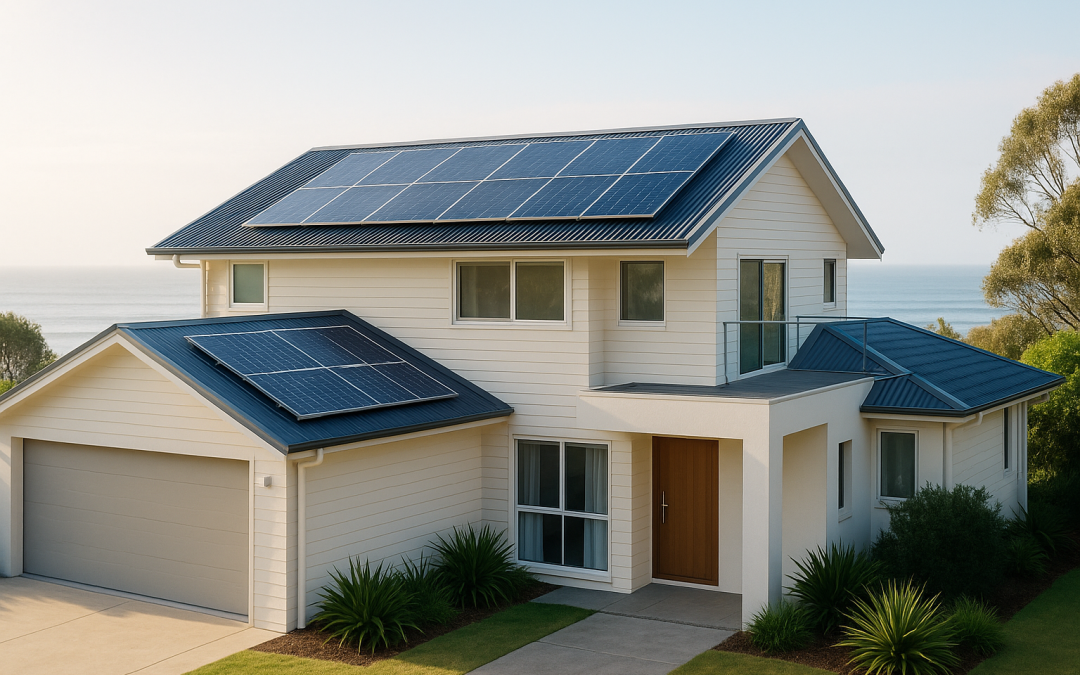
Solar Tweed Heads: practical advice on system size, inverters, batteries and maintenance
Tweed Heads gets strong sunshine, but local conditions still matter. Salt air, summer storms and heavy air con use can all affect how your system performs over time.
If you’re searching solar Tweed Heads, you’re usually trying to answer a few practical questions:
- What size system will cut your bills without overbuying?
- Which solar inverters are worth paying for?
- Do you need solar panels and batteries, or panels first?
- What maintenance actually matters near the coast?
This guide will help you choose with less guesswork.
Start with your goal: bill savings, night-time control, or backup

A good design starts with what you want the system to do.
1) Lower your bills
You’ll get the best value when you use solar power while it’s being made. That usually means shifting some usage into daylight hours.
2) Use more of your solar at night
If most of your power use happens after sunset (cooking, air con, hot water, entertainment), a battery is usually worth considering.
A quick definition:
- kW = how much power the solar system can produce at a moment (system size)
- kWh = how much energy a battery can store (storage size)
3) Keep essentials running in an outage
Not every battery system gives blackout protection.
Backup needs the right design, such as:
- a battery-compatible inverter (often a hybrid inverter)
- the right switchboard work
- an essential loads circuit (the items you choose to keep powered)
If you tell your installer your priority early, your quote will make more sense.
Solar system sizing in Tweed Heads (kW): a simple way to think about it

System size is measured in kW. Bigger isn’t always better.
A sensible starting point for many homes:
- 6.6 kW: Often suits smaller households or homes with modest daytime use.
- 8–10 kW: Common for families, work-from-home homes, or higher air con use.
- 10+ kW: Can suit high usage, EV charging, pool equipment, or larger roof space.
Two checks matter more than any rule of thumb:
- Your bills and usage pattern: average kWh per day, and when you use it
- Your roof: usable area, orientation, shading, and roof condition
A quick note on tariffs and feed-in tariffs (FITs)
If you export most of your solar to the grid during the day and buy a lot of power at night, your results depend heavily on your tariff and feed-in tariff (FIT). FITs and rates change, so it often pays to design around self-consumption (using more of your own solar at home).
For rebate basics (STCs), see: Australian Federal Government solar rebate overview.
Choosing solar inverters: what matters in real homes

The inverter converts DC solar power into AC power your home can use. It also affects monitoring, efficiency and whether a battery can be added later.
If you’re comparing best solar inverters for Australian conditions, focus on:
- Correct sizing for your panel array and supply (single-phase vs three-phase)
- Warranty support in Australia (and who actually handles claims)
- Heat tolerance and where the inverter is mounted (shade and airflow matter)
- Monitoring that’s clear and useful (production and fault alerts)
You’ll often see brands like Sungrow solar inverters in Australian installs. Brand matters, but so does correct sizing and a tidy installation.
For a deeper comparison, read: Best Solar Inverters Australia (2026 Expert Guide).
String inverter vs hybrid inverter (plain English)
- String inverter: great for straightforward solar-only systems.
- Hybrid inverter: designed to work with a battery now or later, and can support backup circuits when installed and wired for it.
If you’re even half-considering storage, asking for a battery-ready design can avoid expensive upgrades later.
Solar batteries in Tweed Heads: when they stack up

Batteries are measured in kWh. They make the most sense when you use energy after sunset.
A battery is usually worth a closer look if:
- you export a lot of solar during the day
- you run cooking, air con or hot water mostly at night
- you want backup for essentials (fridge, lights, internet, selected power points)
- your night-time rates are high
A practical way to think about battery size
Start with what you want to run after dark.
Write a simple “essentials” list:
- fridge + lights + internet
- a few power points for charging and a laptop
- fans, or a small air con (if comfort backup matters)
Then decide how long you want that to last: a few hours, overnight, or longer.
If you’re weighing up solar panels and batteries versus panels first, this will help: Solar Batteries vs Solar Panels: which should you choose?.
If blackout protection is a key driver, read: Hybrid solar systems explained (how they keep you powered 24/7).
Off-grid vs hybrid vs grid-tied: what suits Tweed Heads?
Most Tweed Heads properties stay grid-connected, because the grid is available and connection costs are already sunk.
Grid-tied solar
- Usually the lowest cost option.
- Strong bill savings if you can use power during the day.
- No power in an outage unless you add backup-capable storage.
Hybrid solar (solar + battery)
- Better night-time control.
- Backup for selected circuits is possible with the right design.
Off-grid solar battery systems
An off grid solar battery setup suits properties where grid connection is not available or not worth the cost. Off-grid systems need careful design, more storage, and often a generator for extended bad weather.
You might see examples like off grid solar Tamworth systems and wonder if you need the same approach. The big difference is grid access and your usage profile.
For a clear comparison, see: Off-grid solar systems vs hybrid solar: which is right for you?.
Coastal maintenance in Tweed Heads: what’s worth doing
Near the coast, panels can collect salt haze, dust and bird droppings faster. You don’t need to fuss over them every month. You do need a simple routine.
A realistic maintenance routine
- Check monitoring monthly: look for sudden drops in daily output.
- Visual check from the ground every few months: debris, grime, new shade from tree growth.
- Clean only when needed: if panels look dirty and output has dropped.
For safety and panel protection:
- Don’t use high-pressure cleaners.
- Don’t use harsh detergents.
- Don’t climb on the roof unless you’re trained and equipped.
If access is steep or tricky, a professional clean and inspection can be worth the money.
More practical tips here: 7 maintenance tips for solar panels to lower energy bills.
Comparing solar quotes in Tweed Heads (without guesswork)
Quotes can look similar and perform very differently.
Ask questions that show whether the system is properly designed:
- Is the design based on your bills and usage times, or just roof space?
- Are installers CEC-accredited, and is all electrical work to Australian standards?
- What panel and inverter models are listed (not just the brand)?
- Where will the inverter be installed (heat and airflow)?
- If you want batteries later, is the system designed for it now?
If you’re also comparing nearby areas like solar Byron Bay or solar Ballina (including searches like solar panels Byron Bay and solar panels Ballina), the same rules apply. Good solar is good design, plus clean installation.
For more reading, browse the Freedom Energy Blog.
Next step: get a system recommendation that fits your usage
If your goal is clear (bill savings, backup, or both), you’re ready for a proper recommendation.
Talk to Freedom Energy Solutions for a Tweed Heads solar and battery assessment. We can:
- review your usage and bills
- check roof space, shading and switchboard requirements
- recommend system size (kW), inverter type, and battery options (kWh) if suitable
- explain self-consumption vs export in plain English
If you’re ready to price a system, request a quote here:
https://freedomenergysolutions.com.au/solar-panels-tweed-heads/
{“@context”:”https://schema.org”,”@graph”:[{“@context”:”https://schema.org”,”@type”:”BlogPosting”,”headline”:”Solar Tweed Heads: Practical Advice on System Size, Inverters, Batteries and Maintenance”,”description”:”Solar Tweed Heads guide: choose the right system size, solar inverters and battery setup, plus coastal maintenance tips for better long-term performance.”,”datePublished”:”2026-06-04T00:08:52.658Z”,”dateModified”:”2026-06-04T00:08:52.658Z”,”mainEntityOfPage”:{“@type”:”WebPage”,”@id”:”https://freedomenergysolutions.com.au/solar-tweed-heads-guide/”},”url”:”https://freedomenergysolutions.com.au/solar-tweed-heads-guide/”,”author”:{“@type”:”Person”,”name”:”FREEDOM ENERGY SOLUTIONS”},”image”:[“https://freedomenergysolutions.com.au/wp-content/uploads/2026/05/featured-1-15.png”],”publisher”:{“@type”:”Organization”,”name”:”FREEDOM ENERGY SOLUTIONS”,”logo”:{“@type”:”ImageObject”,”url”:”https://freedomenergysolutions.com.au/wp-content/uploads/2017/07/freedom-energy-large.png.webp”}}},{“@context”:”https://schema.org”,”@type”:”FAQPage”,”mainEntity”:[{“@type”:”Question”,”name”:”What size solar system suits most Tweed Heads homes?”,”acceptedAnswer”:{“@type”:”Answer”,”text”:”Many homes fall in the 6.6 kW to 10 kW range, depending on roof space and how much power you use during the day. Your day vs night usage often matters as much as total kWh.”}},{“@type”:”Question”,”name”:”Are solar batteries worth it in Tweed Heads?”,”acceptedAnswer”:{“@type”:”Answer”,”text”:”A battery is usually worth considering if you use a lot of electricity at night, export lots of solar during the day, or want backup for essential circuits. Value depends on your tariffs, feed-in tariff (FIT), and how much stored energy you use.”}},{“@type”:”Question”,”name”:”What’s the difference between a string inverter and a hybrid inverter?”,”acceptedAnswer”:{“@type”:”Answer”,”text”:”A string inverter suits solar-only systems. A hybrid inverter is designed to connect a battery now or later, and can support backup circuits if the system is designed for it.”}},{“@type”:”Question”,”name”:”How often should solar panels be cleaned near the coast?”,”acceptedAnswer”:{“@type”:”Answer”,”text”:”Check your monitoring monthly and do a visual check from the ground every 6–12 months. Clean only when there’s clear build-up or a noticeable drop in output. Avoid high-pressure cleaning and unsafe roof access.”}},{“@type”:”Question”,”name”:”Can I add a battery to my existing solar system?”,”acceptedAnswer”:{“@type”:”Answer”,”text”:”Often yes, but it depends on your inverter type, switchboard capacity, and battery compatibility. A site inspection is the quickest way to confirm whether a retrofit makes sense.”}},{“@type”:”Question”,”name”:”Do solar rebates still apply in NSW?”,”acceptedAnswer”:{“@type”:”Answer”,”text”:”Small-scale Technology Certificates (STCs) are commonly applied as an upfront discount, but values and rules can change. Check the current settings and your installer’s paperwork at the time you request a quote.”}}]}]}
Recent Comments