
Fronius hybrid inverters explained (Australia): what you’re really buying
If you’re searching “Fronius hybrid”, you’re usually trying to do one or more of these things:
- Use more of your solar at night (instead of exporting for a low feed-in tariff).
- Get some backup power when the grid goes out.
- Install solar now and add a battery later.
This guide explains what “hybrid” means in Australia, where Fronius fits, and how to avoid the common “I thought it did backup” surprise.
What “hybrid” means in Australian solar
In Australia, “hybrid” usually means a grid-connected solar system that can work with a battery. The main point is simple: use more of your own solar and buy less from the grid.
A standard grid-connected system works like this:
- Solar panels produce DC power.
- A solar inverter converts it to AC power for your home.
- Extra power is exported to the grid (and you may be paid a feed-in tariff).
A hybrid setup adds:
- A battery to store spare solar.
- Controls to decide whether energy goes to the home, the battery, or the grid.
Important: “Hybrid” does not automatically mean “whole-house backup”. Backup depends on the system design, compliant switching, and which circuits you choose to support.
That distinction matters in real-world Australian conditions. We often see hot summer peaks, growing electric loads (air con, EVs, induction cooking), and local network limits (including export limits and voltage rise). Hybrid systems can help, but only when they’re designed around your goal and your local rules.
Where a Fronius “hybrid” setup fits (and where it doesn’t)

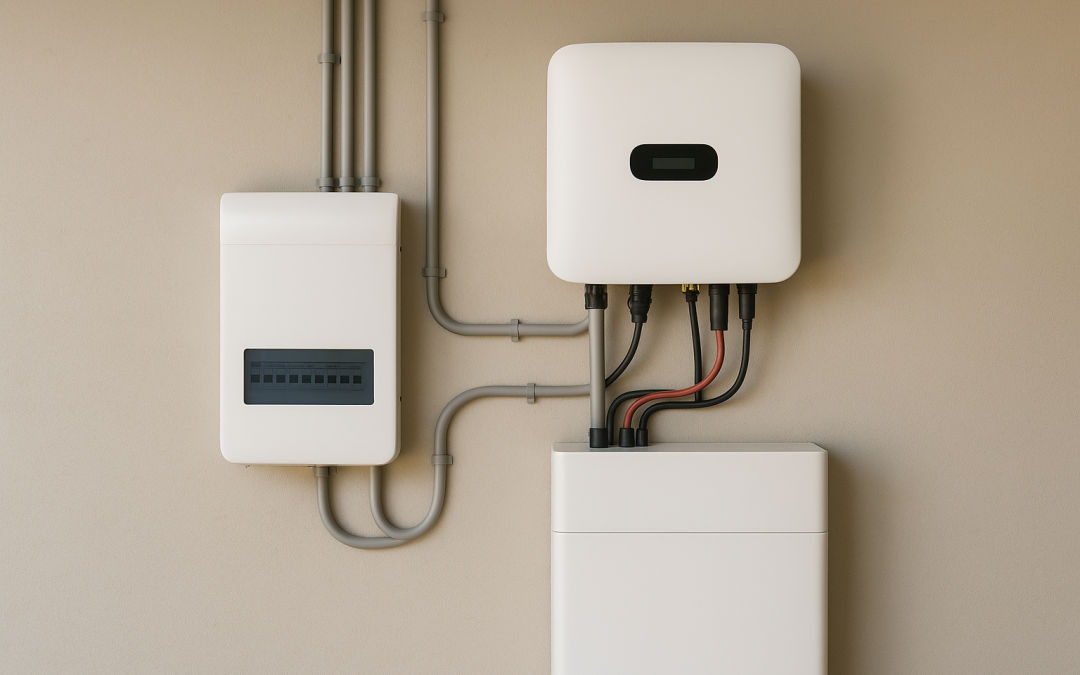
A quality inverter install should look tidy, protected and serviceable.
Fronius is well known for reliable solar inverters used across Australia. In a hybrid system, the inverter still converts solar power, but the full system also needs a safe, compliant way to:
- Charge a battery
- Discharge a battery into the home
- Manage export limits (if your network requires them)
- Switch to backup supply during outages (if you want backup)
Depending on the model and design, “Fronius hybrid” can mean:
- A Fronius inverter paired with battery hardware that supports hybrid operation, or
- A Fronius inverter used alongside a separate battery inverter/charger.
The best results come from choosing the system around your outcome (bill control, backup, or both), not the label.
Freedom Energy Solutions designs and installs solar systems for Australian conditions, including coastal environments around places like Tweed Heads, and inland areas such as Tamworth and Armidale. Local heat, voltage variation, and network constraints can affect what’s practical.
Quick self-check: what are you aiming for?
Pick the closest match:
Bill control (use more solar at home, reduce imports)
Backup for essentials (fridge, lights, internet, a few power points)
Business continuity (selected circuits, managed loads, three-phase considerations)
Your answer changes the hardware, wiring, and what the system can realistically do.
A useful gut-check:
- If you mainly care about bills, you’re usually optimising for self-consumption and tariff fit.
- If you care about outages, you’re optimising for safe switching and load management.
Backup power: the detail that catches people out
Many people assume: “If I get a battery, I’ll have power in a blackout.”
Not always. Most grid-connected solar systems shut down during an outage (anti-islanding) to protect line workers.
To get backup, you usually need:
- Approved changeover switching
- An essential loads circuit (a dedicated backup circuit)
Your installer also needs to follow Australian standards and your distributor’s connection rules. These rules can differ by region and may limit which backup arrangements are allowed.
One more practical point: in many suburbs outages are short and rare. In storm-prone areas they can be longer. It’s worth being clear about what problem you’re solving so you don’t overpay for backup you won’t use (or under-build what you actually need).
What can you actually run on backup?
A well-designed essential loads circuit often covers:
- Fridge and kitchen essentials
- A few lighting circuits
- Internet / communications
- TV and device charging
- Garage door (often forgotten)
Loads that often don’t make the cut (unless you increase capacity and rework wiring):
- Ducted air conditioning
- Large electric hot water systems
- Pool heaters
- EV charging
A practical approach: write down what you must keep running for 4–8 hours, then estimate what will run at the same time.
If backup matters, ask your installer to confirm:
- Which circuits will be backed up
- The backup power limit (kW)
- Any load-shedding behaviour (what gets dropped if you overload it)
Note: backup isn’t just about battery size. Some appliances have high start-up current (some fridges, pumps, older air con), so the system may need extra headroom.
Battery and inverter sizing: simple rules that avoid expensive mistakes
Sizing is where hybrid systems either shine or disappoint.
You’re balancing:
- kW (power): how much you can run at once
- kWh (energy): how long you can run it for
A bigger battery (kWh) runs longer, but you’re still limited by inverter output and what the backup circuit can supply.
Practical examples (typical Australian homes)
- For night-time self-consumption, you usually get better value matching battery capacity to evening/overnight usage (not total daily usage).
- For outage support, focus on essential loads and backup design, not just a bigger battery.
Many homes install 5–10 kW of solar (roof space and network rules allowing). Battery sizes vary because usage varies.
Two local caveats worth knowing:
- In high-solar areas, your network may limit exports. More panels don’t always mean more savings if export is clipped.
- In hot Australian summers, heat and install location can affect performance over time.
Also consider future loads. Adding an EV, upgrading to ducted air con, or moving from gas to electric hot water can change what “right sized” looks like.
The best answer comes from your interval data plus a site check.
Feed-in tariffs (FITs) and why hybrid is popular

Switchboard condition and spare capacity often decide what’s possible with backup.
In much of Australia, feed-in tariffs can be modest compared to what you pay to import electricity. Rates vary by retailer and plan, and they change over time.
Hybrid systems are popular because:
- Exporting for a low FIT can feel like a poor deal.
- Storing solar and using it later can reduce imports when power is expensive.
This matters even more on time-of-use tariffs, where evening power can cost much more than daytime export credits.
Batteries add upfront cost, so payback depends on:
- Your tariff (including time-of-use)
- Your routine (when you use power)
- How often the battery cycles
- Any export limits on your system
A good installer should run the numbers using your data, not generic assumptions.
Choosing a Fronius inverter for a hybrid system: what to check

Your roof space and shade profile set the ceiling for solar production.
These checks usually matter most before recommending a setup.
1) Single-phase vs three-phase
- Many homes are single-phase.
- Larger homes, workshops, and many businesses are three-phase.
Three-phase hybrid can work very well, but backup design is more involved. You may need to choose which circuits (or which phase) are backed up.
Decision guidance: if you’re three-phase and want backup, ask early whether you’re aiming for:
- Backup on one phase for essentials, or
- Broader coverage across phases
The wiring and equipment approach can differ.
2) Switchboard and metering
Hybrid systems may require:
- Extra protection devices
- Space for backup changeover gear
- Consumption metering for monitoring and control
If the switchboard is crowded or outdated, allow for upgrade work. It’s common and worth doing properly.
In older homes, also check:
- Whether there’s room for a dedicated essential loads circuit
- Whether circuits are clearly labelled
Backup is harder (and more expensive) to do neatly if circuits are poorly grouped. Good labelling and sensible circuit separation reduces surprises.
3) Export limiting and network rules
Some networks require export limits, and limits can vary by location. This is more common on long rural feeders and in areas with lots of rooftop solar.
In parts of regional NSW and similar networks, voltage constraints can also cause inverters to reduce output at times. Good equipment and settings help the system respond properly to local grid conditions.
A good design should manage export control while still delivering strong self-consumption.
4) Heat, salt air, and installation location
Australian conditions matter:
- Garages can get hot.
- Coastal air can accelerate corrosion.
- Direct sun on the inverter housing is not ideal.
This is where local knowledge pays off. Coastal areas like Tweed Heads often suit more protected, well-ventilated locations. Inland areas like Tamworth and Armidale can see hot summers and cool winters, so placement, airflow, and clearances still matter.
Ask where the inverter and battery will go, how ventilation will be handled, and how service access will be maintained.
Note: some “out of the way” spots (tight cupboards, unventilated corners) look tidy but can run hotter. That can reduce output on very warm days and may shorten component life.
“Can I add a battery later?” Yes, but plan it now
Yes, you can often add a battery later. The cheapest way to do that is to plan for it during the initial solar install.
If you’re installing a Fronius inverter now and want storage later, you can often reduce future costs by preparing:
- Switchboard space
- Conduit paths
- A clear battery location
- Monitoring and metering that won’t need rework
If you think you’ll want backup later, say so early. Designing for backup can change how circuits are grouped and how the switchboard is laid out.
Also consider how your distributor handles battery connections and export settings. Connection requirements can change, so leaving room for compliant upgrades is usually money well spent.
Start here for models and options:
Hybrid vs off-grid: a quick reality check
A hybrid system is usually the best fit if you:
- Have a grid connection
- Want lower bills and more control
- Want optional backup for essential loads
Off-grid can make sense if you:
- Don’t have a practical grid connection
- Can justify more battery capacity
- Are prepared for generator support during long cloudy periods
Australia’s weather patterns matter. Extended wet periods, winter shading, and consecutive cloudy days can quickly expose an under-sized off-grid system.
If you’re on acreage or a bush block:
Common mistakes (and how to avoid them)
Mistake 1: Buying “hybrid” expecting whole-house backup
Fix: Decide what must run in an outage and design the essential loads circuit around that.
Whole-house backup is possible in some cases, but it costs more and is more complex (especially on three-phase). Most homes don’t need “everything” in a blackout—they need “the right things”.
Mistake 2: Oversizing solar without thinking about export limits
Fix: Check your network requirements and design for self-consumption.
In some areas, smarter design beats more panels. If your inverter is regularly curtailing export due to local limits or voltage conditions, shifting value into self-consumption (battery, timers, smart hot water control) can be more effective than adding panels.
Mistake 3: Picking a battery size without checking night usage
Fix: Use interval data if possible.
If you don’t have it, start with monitoring and a realistic plan for future loads. Also be wary of sizing off one “big bill” month, because seasonal changes can swing the numbers.
Mistake 4: Forgetting switchboard work, cable runs, and protection
Fix: Budget for the electrical work.
This is what keeps the system safe, compliant, and serviceable. It’s especially important for backup, because changeover switching and circuit separation must be done cleanly and to standard.
Checklist: bring this to your quote request
- Are you chasing bill savings, backup power, or both?
- Which appliances must run during an outage?
- Single-phase or three-phase?
- Average daily usage (kWh/day) from your bill
- Future loads (EV, air con upgrade, pool, induction cooking)
- Preferred battery location (and any heat constraints)
If you’re unsure, a quick call to clarify priorities plus a site visit is usually the fastest way to get the design right.
Talk to Freedom Energy Solutions about a Fronius hybrid-ready setup
If you want a Fronius hybrid setup designed around your home (not a generic kit), Freedom Energy Solutions can help with inverter choice, battery sizing, and backup design for Australian conditions.
You’ll get clear answers on:
- What your system will power in a blackout (and what it won’t)
- How much solar you can sensibly install under your network rules
- Battery sizing based on your usage
CTA: Request a quote or ask a technical question here:
If you’re still comparing options:

Battery placement matters for heat, access and long-term reliability.
FAQ (copy-ready)
What is a Fronius hybrid inverter?
A “Fronius hybrid” setup is a solar system built to work with a battery, so you can store daytime solar and use it later. Backup power is optional and depends on the design, switching, and which loads you choose to support.
Do Fronius hybrid systems provide backup during outages?
They can, but only if backup is included in the design. Many solar systems shut down in a blackout unless there’s compliant backup switching and an essential loads circuit.
What size Fronius inverter do I need for hybrid solar?
It depends on your solar array size, daytime loads, battery charging goals, and any network limits. Many homes install around 5–10 kW of solar, but the right inverter is based on your site, your usage, and your local grid connection conditions.
Can I add a battery to an existing Fronius inverter?
Sometimes. It depends on your inverter model, switchboard capacity, and the battery system chosen, plus any network requirements at your address. A site check will confirm what upgrades (if any) are needed.
What does “hybrid power switching and console management” mean in plain English?
It’s the hardware and settings that handle safe changeover during outages, plus the monitoring that shows solar, battery, and household loads. It’s how the system decides what powers what, and what gets switched off if you exceed the backup limit.
Is hybrid solar worth it if my feed-in tariff is low?
It can be. If your FIT is low and you export most of your solar, a battery can improve self-consumption and reduce imports when electricity is expensive (often the evening peak). The value depends on your tariff, usage pattern, export limits, and battery size.
Recent Comments