
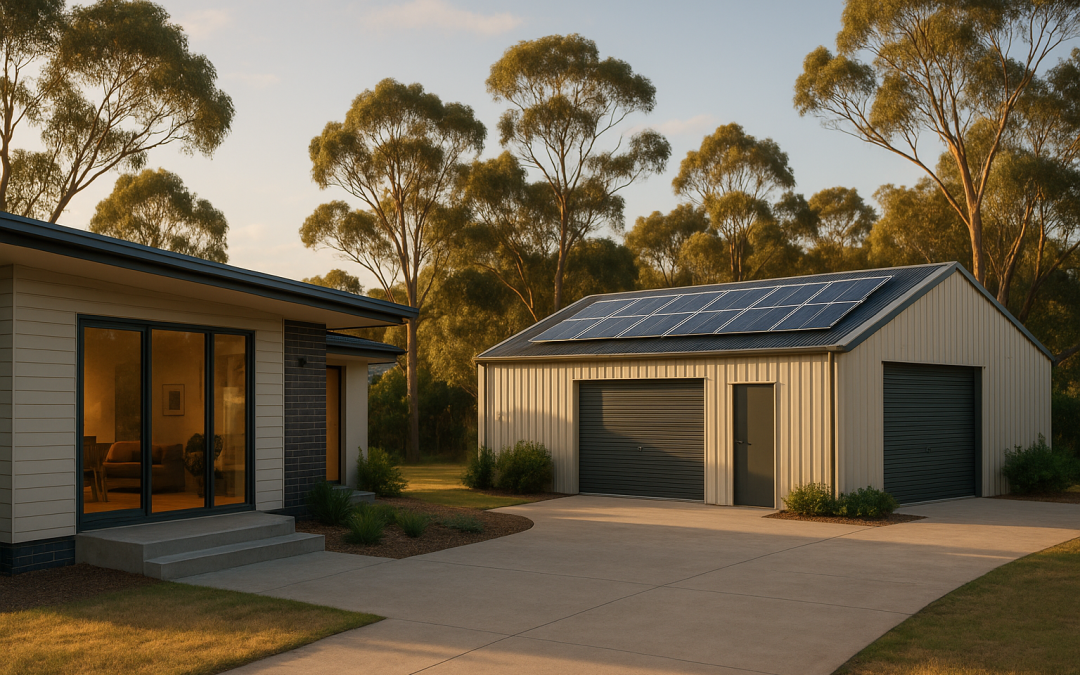
Green energy solutions in Australia: Practical options for homes, farms, and businesses
Green energy in Australia usually involves four main steps: solar, batteries, electrification, and efficiency. The right mix depends on your electricity habits, tariff type, and network rules.
This guide answers the most common questions we get at Freedom Energy Solutions. It’s focused on practical, local advice for long-term results—not just brand comparisons.
What are “green energy solutions”? (And what they aren’t)
Green energy options in Australia fall into:
- Generation: On-site electricity, mostly via solar panels (solar PV)
- Storage: Batteries for homes or larger BESS for farms and businesses
- Electrification: Swapping gas equipment for electric alternatives
- Efficiency: Using less power without losing comfort or productivity
Most people want to either:
- Use less grid energy (or shift to cheaper tariff times)
- Make and store their own power
A fit-for-purpose green setup could include:
- Roof or ground-mount solar panels
- Inverter (battery-ready if you might add storage)
- Optional batteries
- Energy monitoring
- Metering suited to your tariff
You don’t have to do everything at once. Many systems are designed for staged upgrades as your needs change.
Quick guide: Homes vs farms vs businesses
Before you compare brands or gadgets, check which main strategy fits your place.
Homes (suburban and semi-rural)
- Start with solar PV sized for your daily needs and roof.
- Consider add-ons:
- Battery (especially if you use power at night or have a low FIT)
- EV charger (for future proofing)
- Heat pump hot water (timed for the day)
- Reverse-cycle air-con
- Induction cooktop
- Easy improvements:
- Insulation and draught-proofing
- Replace old or inefficient appliances
- Use energy monitoring
Farms and rural properties
- Design for specific needs: pumps, workshops, sheds—beyond just the house
- Key requirements:
- Allow for 3-phase power (for pumps or motors)
- Plan for long cable runs and multiple buildings
- Include battery or generator backup for frequent outages
- Common upgrades:
- Circuits for separate sheds or pumps
- Lightning/surge protection
- Telecom resilience
- Favour:
- Shed roof arrays or ground mounts if roof space/orientation isn’t ideal
Businesses (retail, industrial, commercial)
- Size solar for actual daytime demand—use data logging if possible
- Extras to consider:
- Load shifting (match usage to solar, avoid peak tariffs)
- Export management (work with grid limits)
- BESS for demand management (but check the numbers first)
- Don’t forget:
- Demand charges and time-of-use affect payback
- Export limits may change system size or call for export limiting
Start with your goal: Bill savings, backup, or both?
Your main goal shapes every decision. Ask yourself:
- Lower bills? Start with a well-sized solar system—biggest savings if you can use power during the day.
- Backup for outages? You need a battery (not all batteries provide backup by default) and the right circuits set up.
- Energy independence? True off-grid is possible, but you must plan for winter sun and cloudy periods. Sizing needs to cover several low-solar days.
- Net zero or decarbonising? Go in this order: use your own solar, electrify big loads, improve efficiency, then buy offsets if needed.
A practical question: What do you need to run at night or during an outage? Answering this helps pick the right battery and inverter size.
Solar energy solutions: What matters
Solar PV is popular in Australia because sunlight is abundant—especially in regional NSW. Panel performance depends as much on good design as on brand.
How solar PV works (in a nutshell)
- Solar panels make DC electricity from sun
- Inverters turn DC into AC for your home/business
- You use your solar power first; the grid supplies the rest
- Extra solar may export for a feed-in tariff (FIT), if allowed by your local network
Design is about matching your usage and local export limits—not just filling your roof.
Key solar components
- Panels: Shading, angle, and heat affect output. Dust and tree growth matter, especially in rural areas.
- Inverter:
- String inverters work well with minimal shading
- Hybrid inverters support batteries and sometimes backup
- Metering: Affects billing, especially with time-of-use (TOU) tariffs
- Monitoring: Helps spot issues quickly
Typical system sizes
- Homes: 6.6–10 kW
- Small businesses: 10–30 kW
- Large commercial: ~100 kW (tailored per site)
kW = maximum output at once; kWh = energy over time.
What affects solar output in Australia?
- Roof direction: North is best for volume; east/west can better match afternoon or morning use
- Shading: Be aware of winter shade and future tree growth
- Heat: High temperatures reduce panel output
- Load profile: The more you use power in daylight, the quicker the payback
In places with strict grid rules (like many NSW regions), work to local export limits and check your switchboard’s capacity early.
Tariffs: FITs, TOU, and controlled load
Solar’s value depends on both panels and your tariffs.
Feed-in tariff (FIT)
The FIT is what you earn for extra solar sent to the grid. FITs are falling, and export rules are getting tighter. Your best savings come from using your own solar.
Batteries become more useful when:
- You use lots of power after dark
- FIT is low
- Grid export is restricted
Time-of-use (TOU) tariffs
TOU means electricity costs more at peak times. This matters for where to point panels (often west) and whether a battery or load shift can help lower bills.
Controlled load
Off-peak hot water can conflict with solar. Rewiring to run hot water during solar hours (instead of at night) often saves more.
Battery storage: When it pays, when it doesn’t
Batteries let you use solar at night or during blackouts. They aren’t always the best financial move, but can boost independence.
Good reasons to add a battery
- High evening or night power use
- Low FIT or strict export limits
- Frequent blackouts
- Want higher self-consumption
When batteries might not pay off
- Most of your usage is during solar hours
- Little difference between your FIT and import rate
- Your priority is quick ROI, not backup
Tip: Batteries save most in summer (big afternoon peaks), but winter sun is limited.
kW = what you can run at once; kWh = how long you can run it for.
Virtual Power Plants (VPP)
Some batteries can connect to VPPs—letting you share power with the grid for credits. Check who controls your battery, how export affects backup, and the fine print.
Solar-only, hybrid, and battery-retrofit

Solar-only
Best for large daytime power use. Lowest up-front cost. Usually, no backup unless planned.
Hybrid (battery-ready)
Lets you add a battery now or later. Use a hybrid inverter for easy upgrades and better monitoring. Can back up some circuits in blackouts (not always the whole site).
Battery retrofit
You can often add batteries to an existing solar system, but may need to upgrade your inverter or switchboard first.
Tip: If your inverter is near end-of-life, replacing it now with a battery in mind can cut future costs and headaches.
Remote and rural installs: Build for local realities

Regional and rural sites need to handle more heat, dust, storms, and isolation. Key factors:
- Single vs three-phase: For big pumps or sheds, three-phase is often required—check what’s available
- Cable runs: Longer distances mean careful planning to avoid voltage loss
- Multiple loads: Feeding house and sheds often needs clear wiring separation
- Telecoms: Power cuts can affect phone/internet—include them in backup plans
- Lightning/surge protection: Must-have for regional areas
- Generator integration: Essential for true off-grid
Don’t underestimate battery size for cloudy periods, or forget big loads like pumps/welders. Good design matters.
Business energy: managing demand, shifting loads, handling export limits
For business, solar means lower costs—if your install matches your actual usage and local grid limits.
- Demand charges: These fees (based on highest usage spike) can be significant. Use solar with load management to avoid hits.
- Check:
- Roof strength and space
- Switchboard layout
- Local export limits
- Tariffs and metering type
- Your real working hours
- Monitoring/export control is essential
Electrification: More than just solar

You can cut grid bills by switching to:
- Heat pump hot water
- Modern reverse-cycle air-con
- Induction cooktops
- Efficient pool pumps (timed to run with solar)
- Smart EV chargers
These upgrades reduce the solar and battery size you’ll need.
Boosting ROI with efficiency
The cheapest wins per dollar are often efficiency upgrades:
- Improve insulation/draughts
- Use smart timers for hot water and pool pumps
- Upgrade old appliances as they fail
- Install energy monitoring at the switchboard
Environmental impact: Doing it right
Solar cuts emissions, but only if it works well for years. Long life and high self-use are key. Monitor your system and fix issues promptly. Good maintenance keeps your green impact strong.
See our guide: Solar panels sustainability.
Approvals and planning: How installs work in Australia
Every install must meet local distribution rules, which affect your system size and timings.
Typical steps:
- Site check and usage review (photos of switchboards, roof)
- Quote and design walk-through
- Network approval and paperwork
- Installation (timing depends on size and site)
- Inspection, commissioning
- Monitoring set-up and handover
Tip: If your network is strict, design for self-use with east/west arrays or controlled export.
Costs and payback: What to expect
Costs change with site, access, and equipment quality. Upfront cost isn’t everything; good design and reliable support save more over time.
- Home solar: $5,000–$15,000 (typical)
- Home battery: $8,000+ (varies by size, features, and backup)
- Commercial solar/BESS: Custom pricing (ranges widely)
Main drivers:
- Site and system size
- Complexity (sub-boards, long cables, compliance)
- Battery features
- Export/metering for your network
Payback is about matching your real usage and tariffs, not just sticker price.
Common myths and pitfalls
- Oversizing systems without checking export limits
- Chasing lowest headline price over quality and after-sales
- Ignoring planned future loads (like EVs)
- Assuming all batteries give backup—most need extra setup
- Skipping monitoring/support—faults cost money if missed
Choosing an installer: Must-ask questions
A quality install starts with design, not sales talk. Check:
- Are the installers/designers CEC-accredited?
- How did they check for shading and production estimates?
- Does the inverter fit your current and potential battery needs?
- Who handles support and warranty here in Australia?
- Are their safety standards clear and visible?
Key questions for your installer
- Are both the designer and lead electrician CEC-accredited?
- Will this install meet all AS/NZS standards?
- What are my local export limits, and how is the design built for them?
- Which loads/circuits are backed up (if any)?
- What’s the plan to manage inverter/export trips?
- Who checks monitoring and supports underperformance?
- How does local warranty support work, and how fast do they respond?
Seasonal differences: Summer vs winter
- Summer: High air-con and pool use. Batteries help avoid late peak rates—check if your panels produce enough in hot weather.
- Winter: Shorter days; heating moves use into the evening. Batteries may cover less—consider for essential uses only.
Three pathways people choose
1. Solar-first (lowest cost)
Best if you use power during the day. Set timers for hot water, pool, or appliances. Review your rates each year as tariffs change.
2. Hybrid (battery-ready)
Pick this if you may want batteries later. Make sure your inverter, switchboard, and space suit future upgrades.
3. Hybrid with backup (for essentials)
Ideal where outages hurt. Size the battery for essential loads—not the whole site. Think water, comms, medical, security.
About Freedom Energy Solutions
We tailor solar and battery systems for your goals, network, and site. We cover regional NSW (like Wagga Wagga), north NSW, and Greater Sydney. Our offers include:
- Solar-only and hybrid
- Solar + battery (including BESS)
- Commercial setups (matched to tariffs and grid)
- Rural/remote designs for reliability
Chasing the lowest price rarely gives best value. Focus instead on layout, workmanship, monitoring, and local support.
Ready for a tailored quote?
Book via Freedom Energy Solutions. You’ll speed things up if you have:
- Recent electricity bills (interval data if possible)
- Notes on big loads, upgrades (EV, hot water, pool, etc)
- For business: hours, demand tariffs, large loads
- Photos of roof, switchboard, and meter

FAQ (Quick Answers)
What are green energy solutions?
Ways to cut grid bills and price shocks: solar, batteries, bigger BESS, electrification (heat pumps, reverse-cycle air, EV charger), and efficiency upgrades.
What size solar do I need?
Most homes benefit from 6.6–10 kW—check your actual usage, roof, shade, and network export limits.
Are batteries worth it?
Depends. More value if you use lots of power at night, your FIT is down, peak rates hurt, or you want blackout protection. Check local maths.
Hybrid vs off-grid?
Hybrid: Still grid-connected (with or without backup).
Off-grid: 100% own solar, batteries, and maybe generator—needs careful design and more investment.
Why do TOU tariffs matter?
TOU (Time-of-Use) means power costs more at peak times. West-facing panels and batteries help, or shift big loads to cheaper times.
What are demand charges for business?
Extra fees based on your highest usage spike. Solar and batteries can flatten peaks, but get your tariff details checked.
Are 100kW+ installs possible for business?
Yes, if you have the space, right switchboard, usage, and network rules. Zero-export designs are common with grid limits.
Find more at the Freedom Energy Blog.
Recent Comments