Freedom Energy Freedom Energy Solutions, home 0420 141 078 Get a quote
Northern Rivers hinterland to Tamworth and New England

Off grid solar and battery systems built for full time living

When the connection quote runs to six figures, or the SWER line drops out every storm season, going off grid stops being a lifestyle choice and becomes the sensible engineering answer. Tom Sexton’s local team has designed and installed stand alone power systems on rural properties for more than twelve years, from the Byron hinterland inland to Tamworth and the New England tablelands. Call 0420 141 078 and talk to the people who will actually do the work.

  • 12+ years local
  • Locally owned and operated
  • CEC accredited
  • Lic 41424BC
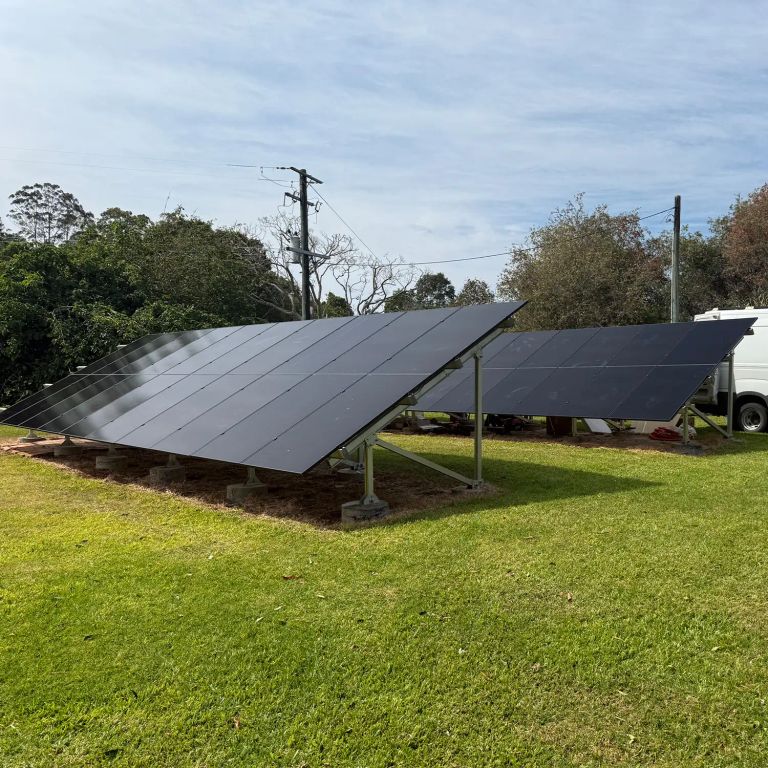
Ground mounted solar arrays on a rural Australian property
Who goes off grid, and why

Three reasons rural properties cut the wire

The connection quote is the deposit on a power station

On a remote build, the network quote to run poles and wires to your house pad can exceed the cost of a complete stand alone system. Every metre of line is money spent on infrastructure you then pay to use. Put that budget into your own generation and storage instead, and the running costs afterwards are yours to control.
SWER lines were never built for modern loads

Much of rural NSW west of the ranges is fed by single wire earth return lines. SWER is cheap to string across distance but thin on capacity, sensitive to voltage swing, and slow to repair after storms because one fault can mean kilometres of line inspection. If your property is at the end of one, you already know the flicker.

Energy independence, properly engineered

Some owners simply want a property that runs itself: solar through the day, battery overnight, generator held in reserve for the worst week of winter. Done properly, off grid living feels completely normal. The lights do not dim when the pump starts, and nobody thinks about the weather forecast before running the washing machine.

How we design it

An off grid system is designed backwards, from your worst week

Grid solar is sized against a power bill. Off grid is sized against physics: what you use, how long you want to coast without sun, and what refills the batteries in July. Skip a step and the system fails in winter, which is exactly when you need it most.

The full method, with a worked example and the actual battery maths, is in our off grid system sizing guide.

1 Loads audit

We list everything the property will run: house, pumps, sheds, workshop. Daily kilowatt hours drive the array, peak and surge kilowatts drive the inverter. Bore pumps that start with a bang matter more than the kettle.

2 Autonomy target

How many dull days should the batteries carry without sun or generator? Most full time homes land at one and a half to three days. More autonomy means more battery; less means more generator hours. It is your call, made with real numbers in front of you.

3 Array sized for winter

The array is sized on the worst month, not the annual average, so it can run the day loads and refill the battery on a short winter day. On rural blocks we often ground mount at a steeper winter tilt, which roofs rarely allow.

4 Battery sized for the nights between

Storage is sized from overnight use times the autonomy target, worked in usable kilowatt hours, not the nominal number on the brochure. Modular stacks let us land on the right size instead of the nearest size.

5 Generator as backup, not a crutch

A well designed system starts the generator automatically at a low state of charge, runs it under proper load, and shuts it off when the sun is back. If the generator is doing the winter heavy lifting, the solar and battery were undersized, and we do not design that way.

6 Fixed quote before work starts

You get the design assumptions in writing: assumed daily load, autonomy days, winter array performance and generator plan. The price is fixed before a single post goes in the ground.

The hardware, honestly

What Tom’s team designs off grid systems with

We install three battery platforms, all modular LFP storage with 10 year or better warranties, and we will tell you straight which one suits a stand alone site. Every figure below comes from the manufacturer datasheets.

Sigenergy SigenStor

A five in one tower stacking from 5.2kWh to 54.2kWh, rated IP66 and operating down to minus 20 degrees. Paired with the Sigen Energy Gateway it switches loads with zero millisecond disruption and carries a two wire auto start connection for a diesel generator, which is exactly the control an off grid site needs.

Fox ESS CQ6

Stackable 5.99kWh modules building from 12kWh to 83.9kWh in a single stack, with a 12 year warranty, the longest in our range. An optional warm up function extends discharge operation to minus 25 degrees, worth having on the tablelands where frosty mornings are the rule, not the exception.

Sungrow SBH

5kWh modules building 15kWh to 40kWh per stack, and up to four stacks in parallel for 160kWh where a large homestead, sheds and pumping justify it. Backed by Sungrow’s 10 year warranty and one of the biggest support networks in Australia.

One honest note. These platforms are hybrid battery systems at heart, so the off grid configuration lives or dies on the inverter pairing, backup wiring and generator integration around them. That is design work, and it is where twelve years of rural installs count. Where a site genuinely needs a different architecture, we say so at the design stage, not after the install. Compare the full storage range on our batteries and backup page.

Panels are the easy half: AIKO, Phono Solar and Trina Solar N type modules, on the roof or on a ground mount frame set to a winter friendly tilt. We have been building rural ground mounts since our early 12kW installs on the red soil, and they remain the best answer where the shed roof faces the wrong way.

Ground mounted solar arrays on a rural Australian property
What it costs

Realistic numbers, fixed before we start

An off grid system is a small power station: generation, storage, control and backup, engineered to carry a home through winter without help. It costs more than grid solar and it should, because it replaces the grid rather than supplementing it.

Weigh that against the alternative. When a network connection quote for a remote build lands anywhere near the same money, the stand alone system wins, because from day one the sun is free and the poles are yours.

From $35,000 installed, indicative

Off grid systems for a full time home typically start around $35,000 installed. The number depends on your loads and autonomy target, and the quote is fixed before work starts. Weekender and shed systems can come in under that; large homesteads with big pumping loads go above it.

Our process

From site visit to switch on

1 Site and loads visit

We walk the property, list the loads, check pump nameplates and look at sun access. Remote sites can start with a detailed phone and photo assessment.

2 Design and autonomy

We model your worst month, agree an autonomy target with you, and size array, battery and generator to it. Assumptions go in writing.

3 Fixed quote

One fixed price for the complete system, installed and commissioned. No provisional sums that grow on site.

4 Install by our crew

The work is done by CEC accredited installers, including the ground mount, cabling runs and generator changeover, with one local company accountable for the lot.

5 Commission and handover

We test the system through a full cycle, set up monitoring, walk you through generator behaviour and stay on the end of the phone afterwards.

Where we work

Coast, hinterland and over the range

The off grid service line runs from our Byron Bay base through the Northern Rivers hinterland and inland across the New England tablelands. Long drives do not scare a crew that has been doing rural installs for twelve years.

Still on the grid out west? We install grid connected solar and batteries there too. See solar panels in Tamworth and solar panels in Armidale, and if you are weighing up off grid against a grid connection, we will give you the honest comparison for your address.

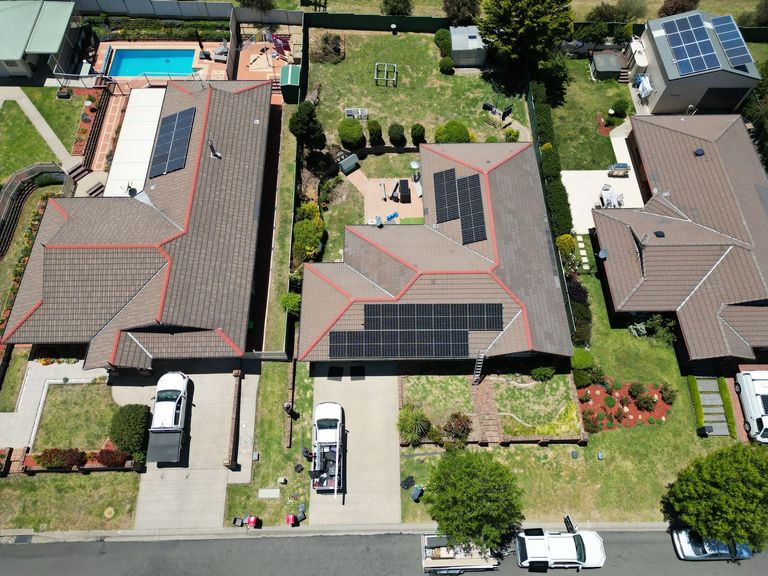
Drone photo of an Armidale rooftop solar installation with the work ute below
Common questions

Off grid questions we answer every week

How many days of autonomy do I actually need?

Autonomy is how long the batteries can carry the property with no meaningful solar input. Most full time homes we design sit between one and a half and three days. Coastal hinterland sites that cop multi day cloud bands lean toward the higher end; tablelands sites with clearer winters can run tighter autonomy and lean on the bigger array. Past about three days the extra battery spends most of its life doing nothing, and a few generator hours a year are far cheaper than the capacity you would rarely touch. We agree the target with you at design time, with your real loads in front of us.

What size generator do I need, and how often will it run?

The generator has two jobs: recharge the battery at a healthy rate and carry the essential loads while it does. That usually means sizing it to the battery charger’s input appetite rather than to the whole house, and setting it up for automatic start from battery state of charge, which the systems we install support. Run it properly loaded and it charges efficiently and stays healthy; a lightly loaded generator idling for hours wears itself out and wastes fuel. In a well sized system the generator is a winter and maintenance tool, measured in tens of hours a year, not a nightly soundtrack.

How does an off grid system perform in winter?

Winter is the design case, so a properly sized system performs on purpose rather than by luck. Days are shorter and the sun sits lower, so we size the array on the worst month and, on ground mounts, tilt it steeper to face the winter sun. Tablelands winters bring hard frosts but also plenty of clear days, so recharge windows are good; the cold itself is handled by choosing hardware rated for it, like battery options that operate to minus 20 or, with a warm up function, minus 25 degrees. If a quote only talks about annual average production, ask what happens in July, and watch the answer carefully.

What maintenance does an off grid system need?

Less than the old off grid folklore suggests, but not none. Modern LFP batteries are sealed and maintenance free, so the routine is mostly checks: panel cleaning if dust or pollen builds up, keeping vegetation from shading the array, a periodic inspection of connections, isolators and enclosure seals, and running the generator under load regularly with fresh fuel so it starts when it matters. We commission every system with a monitoring setup and remain on call afterwards; a yearly health check is a sensible habit for a system your household depends on.

Can I monitor the system if mobile coverage is patchy?

Yes. Monitoring runs over your internet connection, and on remote properties that is usually satellite broadband these days, which works fine. The critical point is that the system does not need the internet to operate: generator auto start, battery protection and load management all run locally in the hardware. If comms drop out you lose the pretty graphs and remote access for a while, not your power. We set the local displays up at handover so you can see state of charge and system status standing in front of it, no signal required.

Designed for your loads, fixed price

Start your off grid design

Tell us about your block, your loads and your build, and get a design and fixed quote from the crew that will install it.

Free quote, no pressure

Get your free quote

Tell us what you are after and we will come back to you within one business day with real numbers for your property. Prefer to talk? Call 0420 141 078.

  • 12+ years local
  • Locally owned and operated
  • Lic 41424BC
What are you after?(Required)
Optional. Roof access, timing, a brand you have in mind, or any question you want answered in the quote.